
Barbados: opening a bank account for non-residents
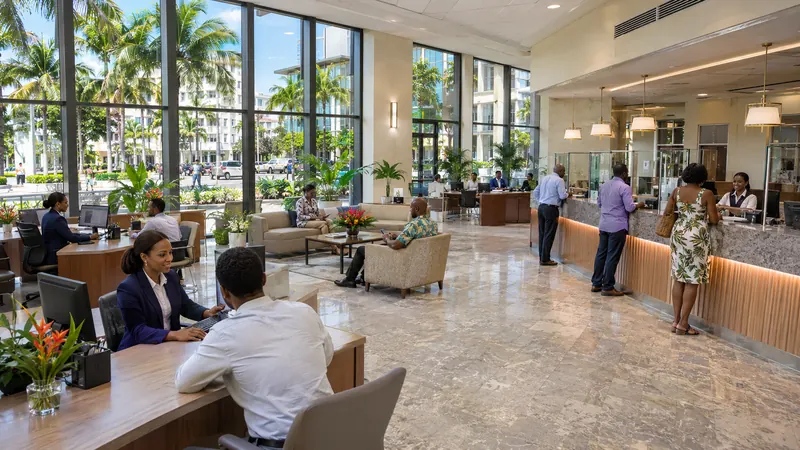
Barbados lets people who do not live on the island permanently hold a bank account for non-residents in Barbadian dollars (BBD) or foreign currency: second-home owners, investors, retirees, remote workers or directors of international companies. The account is requested from a bank licensed by the Central Bank of Barbados, which checks identity, address and the origin of funds. Foreign exchange control rules apply to transfers with other countries and to certain investments, so each application is examined on its own merits.
A pegged dollar and a sturdy banking system
Barbados’s currency, the Barbadian dollar, has been pegged to the US dollar at a fixed rate of 2 to 1 since 1975. This stable parity is an advantage for a non-resident who receives or spends US dollars: exchange risk between the two currencies is virtually nil, and conversions happen at a rate known in advance, apart from bank commissions.
The Central Bank of Barbados supervises commercial banks and financial institutions, while the national revenue authority handles taxation. The island built its reputation on an international services sector, business companies, insurance and wealth management, which attracts foreign professionals and families who settle seasonally.
This long-established institutional framework reassures account holders, but it also means systematic compliance checks at every stage of the banking relationship.
Hurricanes rarely hit the island directly, as it lies east of the Caribbean arc, but banks keep continuity plans and off-site backups. For an owner who is away much of the year, online banking and electronic statements are a great help.
Barbados also benefits from a well-educated workforce and English-language administration, so forms and correspondence are straightforward for most foreign customers, and there is no need for sworn translations.
Who applies for a bank account for non-residents in Barbados
The most common profiles are owners of villas or holiday apartments, retirees who spend the winter on the island, travellers working remotely under the twelve-month Welcome Stamp visa, and directors of international companies. Members of the Barbadian diaspora who keep ties with relatives form another important group.
Banks first look at the economic reason for the account. A precise purpose, such as paying property costs, receiving a salary from abroad or running a local company’s affairs, eases the review. A vague request with no visible link to the island is more often refused or postponed.
Barbadians living abroad can also hold a local account, subject to the foreign currency account regime.
International companies, which long enjoyed a favourable tax regime, have had to adapt to transparency and economic substance rules. A director opening an account for a company must therefore expect extra papers on real activity, beneficial owners and contracts.
Retirees often combine a Barbadian account with a pension paid into a foreign bank, and transfer a fixed monthly amount to cover living costs, which also gives the local bank a clear view of the expected flows.

Documents for a bank account for non-residents
The basic file includes a valid passport, a second identity document if the bank requires one, recent proof of address in the country of residence and a know-your-customer form. Banks often also ask for a reference letter from the customer’s current bank and a professional reference.
The source of funds is documented by payslips, a tax return, a sale deed or an employment contract. A local property owner adds the title deed and, where relevant, the holiday rental contract. Copies may need notarisation or an apostille to be accepted.
A tax identification number from the country of residence is requested for automatic exchange of information purposes.
Banks may set a minimum balance for non-residents and charge a fee when it is not reached. An unused account can also be classed as dormant after a long period without movement, with further charges or closure steps.
The Welcome Stamp visa
Holders of the Welcome Stamp visa show their twelve-month stay authorisation. Banks accept it as proof of a real presence, but also review the remote work contract and the supporting income.
Banks established in Barbados
A few large institutions dominate the market: CIBC Caribbean, Republic Bank (Barbados), RBC Royal Bank, Sagicor Bank and First Citizens. They have branches in Bridgetown and in the tourist parishes of the west coast, such as St James and St Peter, where foreign customers are concentrated.
Terms vary from one institution to another: opening deposit, minimum balance, US dollar accounts and online banking access. It is worth comparing fee schedules before choosing and asking whether the file can be prepared by email, which saves time at the counter.
Branches are concentrated around Bridgetown, but cash machines and service desks exist in tourist areas. Opening hours are more limited than in many European countries, and queues can be long at the end of the week.
Foreign currency accounts
A US dollar, sterling or euro account may be offered to non-residents. It eases receipt of rent or salary in foreign currency, but maintenance fees and conversion rates should be compared.
Exchange control and international transfers
Barbados applies an exchange control law, administered by the Central Bank, which governs fund transfers, foreign currency purchases and investment abroad. Non-residents who receive money from abroad can generally convert and repatriate it, subject to documents and compliance with the rules in force.
International wires pass through correspondent banks. Fixed charges and a commission are added, and delays can reach several days. For large amounts the bank often asks for the reason for payment, invoices or contracts. Keeping these papers eases any later review.
Local payments by cheque, still common, sit alongside debit cards and mobile apps. A non-resident who regularly pays suppliers on the island can therefore ask for a cheque book or local transfers in Barbadian dollars.
Where a company pays staff or contractors on the island, the bank may also ask for evidence of registration with the social security and tax authorities before enabling regular outgoing payments.
Tax, FATCA and information exchange
Barbados has signed an intergovernmental FATCA agreement with the United States and applies the OECD Common Reporting Standard. Banks send the tax authority data on accounts held by non-residents, which shares it with the holder’s countries of tax residence.
A Barbadian account therefore removes no income from the tax of the country where its holder lives. Barbados has a wide network of double tax treaties, some with European countries, which can reduce withholding on interest. A tax adviser is best placed to apply these rules to a concrete situation.
Account holders should also plan for possible taxation in their own country of the interest received and any currency gains. Statements supplied by the Barbadian bank, in Barbadian dollars and in foreign currency, serve as the basis for annual returns.
Documents to keep
Keep annual statements, interest notices and transfer confirmations for several years. They justify tax returns and help answer a possible request from the authority of your country of residence.
Checks before you open a bank account for non-residents
Put precise questions to the bank: document list, required certifications, opening deposit, annual fees, transfer ceilings, online banking access and an international card. Ask also whether the account can be opened without a physical visit.
Compare at least two institutions, taking into account the bank’s experience with foreign customers. Ask about opening times, which can range from a few days to several weeks.
Keep every document sent and answer update requests quickly, since an incomplete file can lead to the account being frozen.
Ask finally about complaint procedures and the deposit insurance scheme, and about whether statements can be issued in the language and format your tax authority accepts.
Banks and providers to open this account
- CIBC Caribbean — Major Caribbean bank, formerly FirstCaribbean, serving individuals, companies and international clients in Barbados.
- Republic Bank (Barbados) — Arm of the regional Republic group, present across the country with current accounts, savings and loans.
- RBC Royal Bank — Bank of the Canadian RBC group, active in personal banking and wealth management.
- Sagicor Bank — Bank linked to the Sagicor insurance and financial services group, present in Barbados.
- First Citizens Bank — Regional bank of Trinidadian origin serving individuals and companies in Barbados.