
Comoros: open a bank account for non-residents in Moroni and beyond
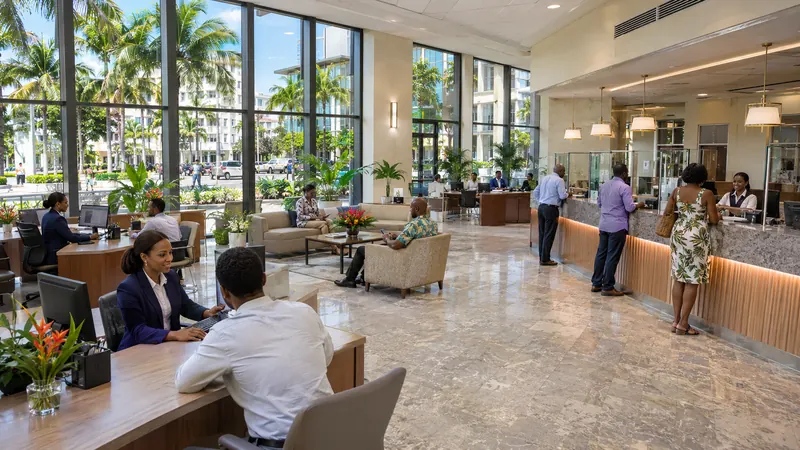
Comoros: how to open a bank account for non-residents means arranging a deposit account in the islands for someone whose habitual home is abroad, often a member of the large diaspora in France or an investor with property interests. The account is usually kept in Comorian francs (KMF), a currency pegged to the euro. Banks verify identity, income and the origin of funds before accepting the relationship. Rules differ between institutions and between islands, so each requirement should be confirmed in writing before any transfer is sent.
An archipelago whose currency follows the euro
The Union of the Comoros groups Grande Comore, Anjouan and Mohéli in the Indian Ocean, with Moroni as capital. The Comorian franc has a fixed rate against the euro, set at 491.96775 francs per euro under a cooperation arrangement with France. That peg is a practical advantage for anyone who earns or saves in euros, because conversion costs are predictable and the exchange-rate risk is limited.
The Banque Centrale des Comores supervises the banking sector and manages the currency. Arabic, French and Comorian are widely used, and French is the language in which most banking documents are written. Mayotte, the fourth island of the archipelago, is a French department with its own banking rules and is not covered by the Comorian system.
Because the peg is guaranteed by the French Treasury, the Comorian franc has been stable for decades, a point that matters to depositors who worry about devaluation. It also means that a euro transfer is converted at a known rate, so the real cost comes from fees and not from currency swings.
Banks that handle a bank account for non-residents in the Comoros
The market is small, with a handful of commercial banks and several microfinance networks. The Banque pour l’Industrie et le Commerce, linked to the French BRED Banque Populaire group, Exim Bank Comores, the Banque de Développement des Comores and the Banque Fédérale de Commerce are the names most often mentioned. The national postal financial service also holds many small savings accounts.
Most diaspora customers do not hold a daily-use account in the islands. They use the local account to receive family transfers, pay school fees, finance building work or hold savings. Banks therefore ask what the account will be used for, and a clear explanation, backed by documents, improves the chances of acceptance.
Branch networks are thin outside Moroni, Mutsamudu and Fomboni, and some small towns have only a postal outlet or a microfinance counter. A holder who wants to withdraw cash during a family visit should check which branch holds the account and whether it keeps enough banknotes, especially around religious holidays when demand rises.
Microfinance networks and savings cooperatives
Meck and Sanduk, the two main savings cooperatives, serve rural households and often accept transfers from relatives abroad. They are not banks, so their guarantee schemes and services differ from those of commercial lenders.

Documents for a bank account for non-residents
Applicants usually present a valid passport or national identity card, a recent proof of address from the country of residence, photographs and a signed application form. The bank may ask for a Comorian contact person, an employer letter or a recent payslip, and a statement about the expected monthly credits.
For property buyers, a draft sale contract or a title deed helps explain the planned use of funds. Business owners must supply statutes, a registration extract and details of beneficial owners. Foreign documents often need to be translated into French and certified. Clear scans may speed up a preliminary review but do not replace originals at signing.
The bank may also ask for a letter from a foreign bank, a recent utility bill and a declaration on the origin of the money. If the account will finance a house, a land certificate, a builder’s estimate or a notary’s letter can help the bank understand why large sums are expected.
Opening remotely or in person
A visit to a branch in Moroni remains the standard route, because the bank needs to see the original passport and collect a signature. Some institutions are prepared to start the file by email and finish it through a relative holding a power of attorney, especially when the holder is a known member of the diaspora with a family link to the branch.
Online banking is limited compared with Europe. Account statements may be sent by email, and mobile payment services exist, yet a request for a duplicate card or a change of address may still need a physical visit. Customers should plan for time differences, public holidays on the islands and occasional connection problems.
A power of attorney should be drafted by a notary, certified at the consulate or apostilled where required, and written in French or accompanied by a translation. The bank may accept it only for limited acts, such as depositing documents or collecting a card, not for signing the main account agreement.
Using a relative as representative
Many holders rely on a family member in Moroni to carry documents to the branch. The bank still identifies the account holder, so the relative’s role is limited and the holder’s signature remains necessary for the main agreement.
Transfers, remittances and exchange control
Remittances from France and the Gulf represent a large share of household income in the islands, and banks and money-transfer companies handle a substantial volume. Transfers through a bank usually require the sender’s identity, the beneficiary’s details and the purpose of payment. Larger amounts may need supporting papers such as a sale contract or an invoice.
Exchange regulations are administered by the central bank and apply to payments abroad and to accounts held by non-residents. Banks quote their own fees and rates, so comparing a bank transfer with a specialist remittance company is worthwhile. A fixed rate against the euro means no currency gamble for euro senders, but commissions can still be significant.
Money-transfer companies remain popular because they pay out in cash across the islands, but a bank account gives a record of the funds that can be shown to authorities abroad. That record can be valuable when a buyer wants to prove how a property purchase was financed.
Receiving transfers from France
A euro transfer is converted at the fixed parity, so the main variable is the commission charged by the sending and receiving banks. Asking both institutions for a total cost estimate avoids unpleasant surprises.
Reporting, FATCA and tax residence
Comorian banks follow customer-due-diligence rules and ask account holders about their tax residence. A person with United States citizenship is usually asked for a W-9, and a resident of a country that exchanges financial information may have to complete a self-certification. The bank may report accounts through the channels set up by international agreements, depending on the countries involved.
The treatment of interest and of money received from relatives depends on the tax law of the holder’s country of residence. Residents of France, for instance, must follow French rules on declaring foreign accounts, and the Comorian bank does not do this on their behalf. A tax adviser familiar with both countries is the right person to ask.
Account holders in Europe should keep copies of statements showing deposits and withdrawals for several years. The Comorian bank will not give tax advice, but it will usually supply a certificate of account balance on request, which many tax authorities accept as evidence.
Questions to put to the bank before sending money
Before opening, ask for a written checklist of documents, the minimum opening deposit, monthly charges and the costs of incoming and outgoing transfers. Confirm whether a non-resident may open the account without travelling and how long the review usually lasts.
Further points to check include the availability of a debit card outside the islands, withdrawal limits, how statements are delivered, and what happens if the account becomes dormant. Beware of intermediaries who offer a quick opening in exchange for a fee: only the licensed bank can accept the customer, and every agreement should be in writing.
Finally, ask who will deal with the account in practice, a named adviser or a general counter. A reliable contact makes it easier to solve problems such as a blocked card, a returned transfer or a request for updated documents when the passport expires.
Banks and providers to open this account
- BIC-Comores (BRED Banque Populaire) — Commercial bank in Moroni linked to the French BRED Banque Populaire group, serving individuals, companies and the diaspora.
- Exim Bank Comores — Commercial bank of the Exim group with branches on the main islands, offering savings, current accounts and trade services.
- Banque de Développement des Comores — Local bank oriented toward lending and deposit accounts for households and small businesses.
- Banque Fédérale de Commerce — Commercial bank providing current accounts and transfers for residents and diaspora customers.