
Equatorial Guinea: open a bank account for non-residents

Equatorial Guinea open bank account for non-residents covers the steps for a foreign person or company to hold funds in a bank in Malabo, Bata or another city while living outside the country. Accounts are usually denominated in Central African CFA francs (XAF), and foreign-currency accounts may be available in some banks. Compliance staff review identity, activity and source of funds, and apply the exchange rules of the CEMAC monetary area. Conditions differ between banks and must be confirmed in writing.
A small oil-based economy using the Central African CFA franc
Equatorial Guinea combines a mainland region, Río Muni, with islands including Bioko, where the capital Malabo stands. Oil and gas dominate exports, and the discovery of offshore fields in the 1990s turned a tiny economy into one of the continent’s richest on a per capita basis, though income is unevenly shared. Spanish, French and Portuguese are official languages.
The currency is the Central African CFA franc, tied to the euro at 655.957 francs, and the country belongs to the CEMAC monetary union. The regional central bank issues the currency, and a banking commission supervises lenders. Because the country is an oil producer, many banks deal heavily in dollar flows from international oil companies, even though the legal unit of account is the franc.
Equatorial Guinea became independent from Spain in 1968, which explains the use of Spanish in public life and the legal influence of Spanish and French models. The capital has been moving gradually toward a planned new administrative centre on the mainland, Ciudad de la Paz, although Malabo remains the main business address for banks and embassies.
A person planning to use the account for investment in oil services, construction or logistics should first check whether the activity needs a licence. Banks usually ask for the licence at opening, and they expect the declared business to match the money entering the account.
Who handles a bank account for non-residents in Malabo and Bata
The banking sector is small. Lenders commonly cited include BGFIBank Guinée Équatoriale, Société Générale de Banques en Guinée Équatoriale, CCEI Bank and the Banco Nacional de Guinea Ecuatorial. Most branches are in Malabo and Bata, with a few in smaller towns. Ownership and branch networks change, so the current list of licensed banks should be checked with the regional supervisor.
Banks mainly serve oil companies, contractors, government employees and a small private sector. Foreign individuals with no link to the country may find it hard to open an account, and compliance staff can ask detailed questions about the purpose of the funds. Applicants with a work contract or a business in the country are in a stronger position.
Regional groups are the first choice for many foreign companies because their head offices elsewhere in Central Africa can provide references and support. Applicants who already bank with the same group in Gabon, Cameroon or Congo may be able to use that relationship as a bridge.
Contractors and oil-service staff
Employees of international contractors often receive salary through a local account arranged by the employer. A letter from the company, with the contract and a passport copy, usually forms the main support for the file.
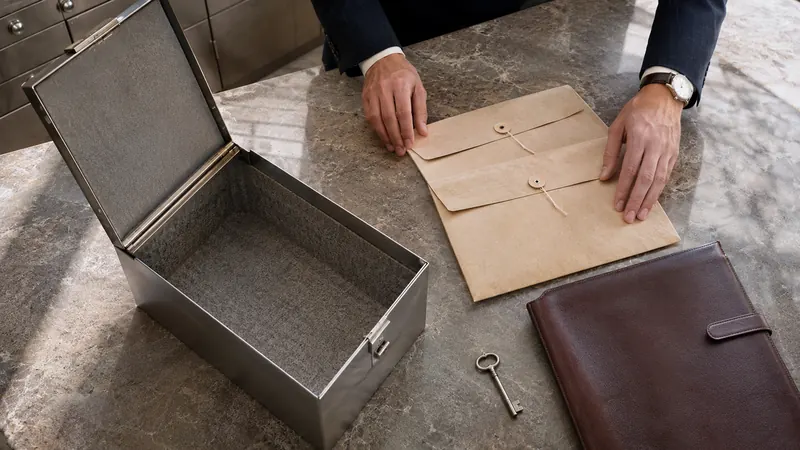
Documents for a bank account for non-residents
Expect to provide a valid passport, proof of residential address abroad, photographs, a signed application and information about occupation and expected transactions. A residence or work permit is requested when the applicant lives in the country, and a letter from an employer can serve as supporting evidence.
Companies provide statutes, a trade register extract, a tax identification number, the list of directors and beneficial owners and a resolution authorising the account. Foreign documents often have to be legalised and translated into Spanish or French, depending on the bank’s working language. Certified translations by approved translators are preferred.
Banks may also ask for a reference letter from the applicant’s bank abroad and for a short statement explaining why a local account is necessary.
For property purchases, the bank can ask for the notarised sale agreement and proof of title. For service contracts with the state or with oil companies, a copy of the signed contract with payment terms helps the bank to match deposits with the purpose declared.
Opening without being physically present
Remote opening is uncommon. The bank generally wants to meet the customer, check the original passport and collect a signature. A representative with a notarised power of attorney can sometimes submit documents, though the bank will still need direct identification of the holder at some stage.
Online banking exists but is limited compared with Europe, and international payments often need a signed order. Telephone and internet connections can be slow, so applicants should allow extra time for correspondence. Hiring a local lawyer or accountant who speaks Spanish or French is often more effective than trying to deal with the bank directly from abroad.
Anyone who has to travel should plan the visit around public holidays and confirm in writing that the right officer will be present. Delays in receiving a card or online banking credentials are common, and the first weeks after opening can be slow.
Language and translation issues
Because banking paperwork may be in Spanish or French, a certified translation of foreign documents prevents delays. A bilingual contact at the bank is valuable when terms are explained.
Exchange control and international transfers
CEMAC exchange regulations require that payments abroad be made through an approved bank, with documents supporting the transaction. Oil-related companies are subject to additional rules on the repatriation of export earnings. Large transfers may require declarations, and cash carried across the border above regional thresholds must be reported.
Incoming dollar or euro transfers are usually converted to XAF unless a foreign-currency account exists. Correspondent banking relationships matter, because some foreign banks apply strict controls to payments linked to the country. Delays and requests for more information are common, particularly for large transfers.
Fees include bank commissions, intermediary charges and exchange margins. Comparing offers among banks, and asking for a written tariff, reduces surprises.
Holders should also ask how quickly the bank credits international payments and whether it provides SWIFT confirmation messages. These documents help to trace delayed funds with a correspondent bank and are useful if a payment must be reconstituted.
Tax reporting, FATCA and due diligence
Banks collect tax-residence information. United States persons complete a W-9 under FATCA, and clients from countries that exchange data complete a self-certification. Politically exposed persons and customers connected to the oil sector undergo enhanced due diligence.
The holder’s country of residence may require disclosure of the foreign account and its income. The Equatorial Guinean bank will not provide tax advice. A professional familiar with both systems can explain whether withholding tax can be credited and what should be declared.
Transparency rules have tightened in recent years, with more banks asking for the identity of beneficial owners and the origin of wealth. Applicants should prepare a clear explanation of their activities and keep supporting documents ready.
Keeping records
Statements, tax certificates and contracts should be archived securely for several years, since they may be needed by the bank or by a tax authority.
Checks before opening the account
Ask for a written checklist, the minimum deposit, monthly fees, the tariff for transfers and the expected processing time. Confirm whether non-residents are accepted, whether remote opening is possible and which currencies the bank offers.
Also check card availability, withdrawal limits, online banking access and the treatment of dormant accounts. Avoid agents who guarantee approval for a fee. Written confirmation of conditions, and copies of all documents sent to the bank, are the best protection if a problem arises.
A short call or message before travelling can confirm that the branch accepts new non-resident customers. The reply, saved in writing, protects the applicant from a wasted trip.
Banks and providers to open this account
- BGFIBank Guinée Équatoriale — Subsidiary of a Central African banking group serving individuals, companies and oil-sector clients.
- Société Générale de Banques en Guinée Équatoriale — Local subsidiary of an international banking group, offering current accounts and corporate services.
- CCEI Bank Guinée Équatoriale — Commercial bank with branches in Malabo and Bata.
- Banco Nacional de Guinea Ecuatorial — National commercial bank with retail and corporate customers.