
Bangladesh: open a bank account for non-residents

Bangladesh open a bank account for non-residents is governed by Bangladesh Bank, which tightly controls foreign exchange and the movement of the taka (BDT). Foreigners settled in Dhaka or Chattogram on a work visa, and Bangladeshis living abroad, for example, can reach taka or foreign currency accounts. Tourists and investors without a local presence face more restrictions, and each bank asks for precise evidence of the activity carried out and of the origin of the funds before approving anything at all in the country.
A strict exchange regime run by Bangladesh Bank
Bangladesh applies the Foreign Exchange Regulation Act of 1947, supplemented by circulars from the central bank. The taka is not freely convertible for capital transactions: any sizeable transfer abroad needs approval or supporting documents. Current operations such as paying invoices or salaries are more flexible.
The central bank has let the taka weaken markedly since 2022, from roughly 86 to more than 120 per dollar, and has moved towards a more flexible exchange rate. For a foreigner this means a taka balance can change in value quickly, and the gap between official and market rates should be followed before converting large sums.
Importers and exporters, numerous in the garment sector, use authorised dealer banks for foreign trade operations. A foreign individual does not have that channel, and must show that incoming funds come from a salary, a scholarship or a family transfer when asking for a conversion into taka. Keeping copies of the original transfer advice makes the request easier to process.
State and private banks
State banks hold a large share of deposits, but local private banks and foreign lenders offer more modern services. Expatriates mostly choose the latter.
Account types open to non-residents
Bangladeshis in the diaspora have dedicated foreign currency products: the non-resident foreign currency deposit account (NFCD) and taka accounts fed by salary remittances. These products sit within a clear framework, notably for repatriating interest and capital.
Foreign nationals who work in the country usually open a taka current account, sometimes a foreign currency account, on presentation of their work permit. Embassies, international organisations and development projects hold specific accounts, subject to approval from the Ministry of Finance or the central bank.
Resident foreigners with short assignments sometimes find that the bank offers only a basic savings or current product, with no cheque book and a limited card. Larger diplomatic and development accounts are opened through a separate corporate desk. Asking which department handles your case avoids wasted visits to the wrong branch.
Foreign currency accounts allow you to hold dollars or euros without converting, but cash withdrawals in foreign currency are limited and banks use the opportunity to check where funds come from.
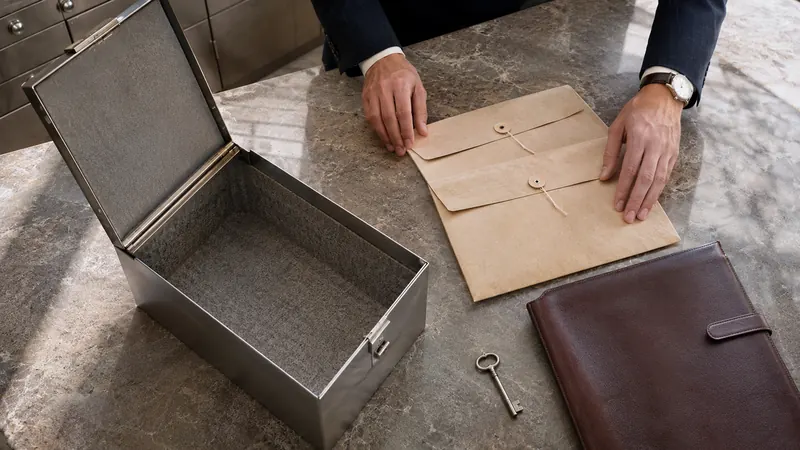
Documents for a bank account for non-residents
For a bank account for non-residents, a bank in Bangladesh asks for the passport, the visa and the work or residence permit, a recent photograph, proof of a local address (lease or utility bill) and the electronic tax identification number (e-TIN). An employer letter and the work contract complete the file.
Overseas Bangladeshis present their passport, proof of residence abroad and often a remittance reference. Some banks accept a partly remote procedure through correspondents or consulates, but biometric identification in a branch is still common.
People whose stay lasts only a few months meet more difficulty, because the tax number and the work permit are issued only to authorised residents. Banks that do receive short-term visitors usually offer just a foreign currency deposit or a prepaid card, with limited services. It is wise to ask a bank officer which products fit a stay of your length before gathering paperwork. A tenancy agreement in your own name is often the hardest item to obtain.
Taka, foreign currency and repatriating funds
Non-residents may repatriate salaries net of tax, dividends and proceeds from the sale of assets, subject to the approvals provided for. Bangladesh Bank asks for tax certificates and bank documents before granting large transfers. Failing to follow the procedure can block the operation for several weeks.
To encourage inflows, the government pays a 2.5 percent incentive on remittances sent through official channels. The measure favours accounts funded by bank transfers rather than the informal hundi network, which is illegal and regularly targeted by the authorities.
Outgoing transfers of savings often require a tax clearance certificate, a statement of income and proof that the funds entered the country through a bank. Employers sometimes assist expatriates with this paperwork. Keeping every remittance advice, pay slip and exchange receipt from the first month avoids delays at the end of the posting.
The remittance incentive
The 2.5 percent incentive on official remittances is aimed at overseas Bangladeshis. It does not apply to the local salary of a foreign expatriate, but it explains why banks promote foreign currency accounts.
Taxes, FATCA and information exchange
Banks collect tax residence declarations and apply FATCA duties for American clients. Bangladesh has signed the multilateral convention on mutual administrative assistance, but participation in automatic exchange under the CRS is narrower than in OECD members.
Interest income is subject to withholding tax, at a rate that depends on the holder’s status and the product. An expatriate should check whether they count as a Bangladeshi tax resident, which depends on days spent in the income year, and whether a treaty with the home country prevents double taxation.
Useful banks and online services
Standard Chartered Bangladesh and HSBC Bangladesh are the two best-known international banks, oriented towards corporate and affluent customers. Among local lenders, BRAC Bank, Eastern Bank, City Bank, Dutch-Bangla Bank and Islami Bank Bangladesh have extensive branch networks.
Mobile payment services such as bKash and Nagad dominate small everyday payments, but they are not bank accounts. Registration generally requires a national ID card or a valid passport and a local phone number. The more modern banks offer an English-language mobile app, which suits an expatriate.
Banks also offer local and international debit cards, QR code payments and transfers through the national payment switch. ATMs are plentiful in Dhaka but rarer outside large cities, which matters if you travel regularly across the country.
Islamic and conventional banks
Bangladesh has several full Islamic banks, including Islami Bank Bangladesh, which offer interest-free accounts where returns come from profit sharing. A foreigner who wants Sharia-compliant banking can choose an Islamic current account while still using international transfer services.
Risks and the state of the banking sector
The sector is hit by a high level of non-performing loans and by governance scandals. Since 2024 the authorities have launched a reform to restructure several struggling banks, including Islamic lenders combined through mergers. Deposits are covered by a limited guarantee scheme.
A non-resident does well to split deposits across two institutions and to prefer international banks or well-capitalised groups for larger amounts. The central bank’s published reports help identify lenders under closer supervision.
State-owned banks often carry weaker balance sheets than private ones, and governance weaknesses are known to analysts. Local and international rating agencies publish assessments that allow a comparison of the strength of lenders before you choose where to place money.
Checks before opening a bank account for non-residents
Ask which account type matches your visa, which currency is offered and whether interest can be repatriated. Have the bank spell out monthly fees, withdrawal caps and outgoing transfer limits, as well as the paperwork required for repatriation.
Also check the bank’s position on receiving international transfers from your country, the card delivery time, the language of customer service and the closing terms. Compare two or three lenders before signing, and keep copies of every form.
Written confirmation of the answers, ideally by email from a named officer, protects you if a branch later applies different rules.
Banks and providers to open this account
- Standard Chartered Bangladesh — Subsidiary of an international group serving affluent clients, companies and expatriates.
- HSBC Bangladesh — International bank offering taka and foreign currency accounts and trade services.
- BRAC Bank — Major local private bank with a wide network and mobile banking services.
- Eastern Bank — Local commercial bank offering foreign currency accounts, cards and diaspora services.
- The City Bank — Bangladeshi private bank known for digital services and accounts for expatriates.