
Haiti: open a bank account for non-residents
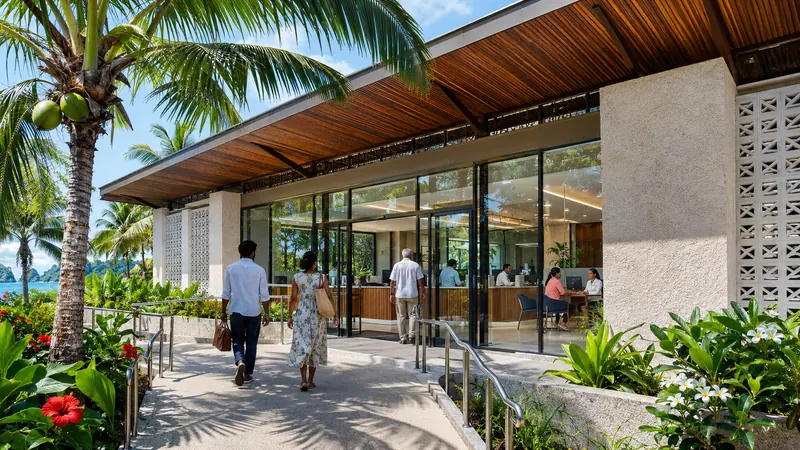
Haiti: a bank account for non-residents is offered by a few commercial banks in Port-au-Prince, in gourdes (HTG) or in US dollars, a currency widely used for savings in the country. Foreign applicants are mostly diaspora members, aid-agency staff, property owners and traders. Opening depends on a passport, proof of address, bank references and a clear explanation of the origin of the funds. The security situation, which limits movement around the capital, weighs heavily on branch visits and on processing times, so every step should be confirmed in writing with the bank.
A French- and Creole-speaking country under strain
Haiti, the first independent Black republic in 1804, has about eleven million inhabitants. French and Haitian Creole are the official languages, so documents in French are read without translation. Port-au-Prince and its upmarket district of Pétion-Ville hold most banking head offices.
The economy leans on remittances from the diaspora living in the United States, Canada, the Dominican Republic and France. Those transfers make up a large part of national income, and banks have built services for receiving them. They also act as a cushion against political shocks, earthquakes and inflation.
The 2010 and 2021 earthquakes and long spells of political instability have tested the system. Banks kept services running, often with reduced means, and the experience has made them careful about accepting new clients, especially when documents cannot be checked with someone on the ground.
Diaspora as the reference clientele
Haitian banks have developed accounts for Haitians abroad, with lighter formalities when the customer is already known through a family member. A relative holding an account can vouch for a new applicant, which speeds the review, although the bank remains free to require the usual documents.
Gourde, US dollars and the central bank
The national currency is the gourde, issued by the Bank of the Republic of Haiti (BRH), which also supervises banks. The rate floats and has fallen sharply over the past decade, which explains the attraction of the US dollar. A large share of bank deposits is denominated in dollars.
For a non-resident that usually makes a dollar account the better way to preserve value. Banks also offer gourde accounts for local spending. Conversion between the two follows the day's rate plus a margin, so ask for the rate sheet before converting a large sum.
Mobile wallets and remittance firms now complement banks, with services that work even without a bank account. A bank account still helps receive wires from abroad and obtain an official proof of funds. Check how your account connects with such services and what fees apply.
An owner paying local costs in gourdes may prefer converting small sums more often rather than one big amount, since the rate fluctuates. Ask whether the bank offers automatic conversion for recurring payments.
Cheques and wire transfers
Cheques drawn abroad clear slowly, sometimes taking over a month. An international wire remains the safest way to fund an account, provided you quote the US intermediary bank named by the Haitian institution.

Who applies for a bank account for non-residents in Haiti
Diaspora members come first: they support relatives, buy land, build a house or start a small business. Many hold the nationality of their host country and arrive with a foreign passport, sometimes with an old Haitian document alongside.
Staff of NGOs, United Nations agencies and foreign companies, missionaries, researchers and a few investors follow. For them a local account pays local wages, rent and suppliers. The security situation has reduced the foreign presence, but funding needs of humanitarian organisations remain high.
Business owners looking for a company account add a certificate of registration, articles of association and a list of partners. The bank examines the activity, the intended clientele and expected flows. NGOs often present the accreditation letter from the Haitian state, which serves as the main document for opening.
Documents and timing
Haitian banks ask for a valid passport, recent proof of address (usually a bill from abroad), bank references, a note explaining the activity and source of funds, and a tax number (NIF) for customers with local income. Photos and a signature specimen complete the file.
Processing ranges from a few days to several weeks. Conditions in Port-au-Prince can slow the sending of papers and make a branch visit hard. A representative holding a power of attorney may handle part of the process, though the bank retains the right to meet the account holder.
If a signature before a notary is requested, choose one who can apostille the deed. The Haitian consulate in your country of residence may also legalise the signature. Ask the bank which formula it accepts, since choosing the wrong one can cost several weeks.
Opening deposit
Some banks set a minimum deposit in dollars, others in gourdes, depending on the account type and the client's profile. Ask whether the deposit can be wired before the signing rather than paid in cash at the appointment.
Commercial banks of Haiti
Unibank and Sogebank are the two largest private banks, with branch networks, ATMs and a presence in provincial towns. The National Credit Bank (BNC), state-owned, holds large public deposits. Capital Bank and the Banque Populaire Haïtienne (BPH) complete the offer.
Online services and mobile apps are improving, though quality varies. The biggest banks hold dollar accounts and international transfer services and advise foreign clients better. Their Pétion-Ville branches are reputed easier to reach than those downtown.
Several of these institutions operate remittance subsidiaries with pick-up points across the country. That lets an account holder abroad send money to a relative who has no account. Compare the cost of these transfers with a direct wire between accounts.
Opening a bank account for non-residents remotely: limits
In the current climate most banks tolerate preparing the file by email and signing before a notary or a Haitian consulate abroad. A representative with a power of attorney may also act on site. Banks still keep the freedom to refuse a fully remote opening out of caution.
Before travelling, consult your foreign ministry: many governments advise against travel to Haiti, and flights have been interrupted several times since 2024. The time zone is UTC-5 with daylight saving. Do not plan a bank appointment without written confirmation from the branch.
A short stay requires serious preparation: secure transport from the airport, verified lodging and the bank's prior agreement on where the meeting will take place. If a branch cannot be reached, some banks accept documents handed over through a partner or a branch in another country.
Compliance, FATCA and safety of funds
Haiti applies anti-money-laundering rules overseen by the BRH and a financial intelligence unit. Banks ask for source of funds, purpose of the account and identity of the beneficial owner. US citizens complete FATCA forms, and large cash deposits receive extra checks.
Holders remain responsible for declaring the account in their country of residence. Physical safety of bank trips and of ATMs is a real concern: favour transfers, avoid carrying large amounts of cash and check which branches are open before heading out.
International sanctions target certain individuals linked to Haiti. Banks screen customer and counterparty names against those lists, and a namesake can delay a transfer while an additional check is carried out. Answer information requests quickly to avoid a freeze.
Declaring a Haitian account
Residents of the United Kingdom, Canada or the United States generally report foreign accounts to their tax office, with penalties for omission. Keep the gourde and dollar statements from your Haitian bank together with the account contract, as a tax office abroad may ask for them years later.
Questions to ask before opening
Ask for the current document list, the minimum deposit, maintenance charges and commissions on incoming and outgoing wires. Clarify whether a dollar account is open to a non-resident, whether interest is paid and whether an international card is issued. Confirm withdrawal limits.
Also ask which branches remain open, how to reach an adviser if one closes and how you will view statements remotely. Keep a written record of each answer: the country's situation moves, and a bank's conditions can change from one month to the next.
Finally, find out how incoming wires with vague descriptions are handled. A clear reference, with the holder's name and the reason for payment, speeds up crediting. Transfers without a purpose are sometimes held for days while the sender is contacted.
Banks and providers to open this account
- Unibank — Haitian commercial bank with branches, gourde and dollar accounts and transfer services.
- Sogebank — One of the two largest private banks in Haiti, with online banking and a branch network.
- Banque Nationale de Crédit (BNC) — State-owned bank serving individuals and companies.
- Capital Bank — Private Haitian bank offering accounts, cards and online services.