
Grenada: open a bank account for non-residents
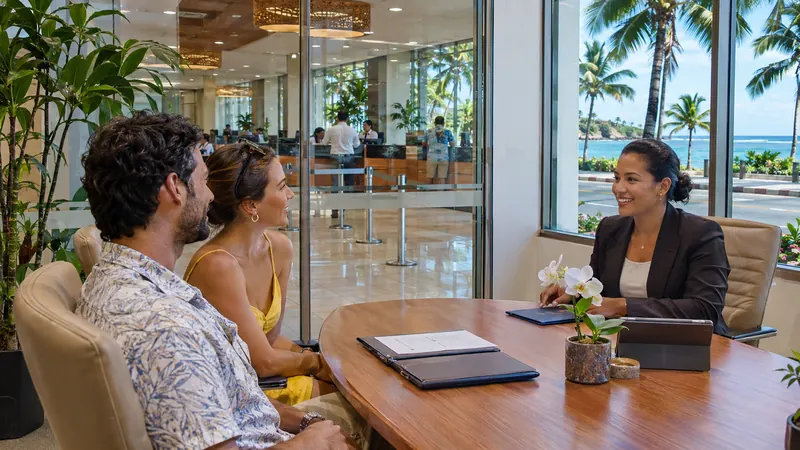
Grenada: a bank account for non-residents can be opened with the commercial banks of St George's, the capital of this three-island Caribbean state that uses the Eastern Caribbean dollar (XCD), pegged to the US dollar. Villa owners, medical students at St George's University, yacht crews and citizenship-by-investment applicants make up most foreign customers. Banks usually ask for a passport, proof of address abroad, bank references and an explanation of the funds, and the time needed to process the file differs from branch to branch.
The Spice Isle and its compact banking sector
Grenada, known as the Spice Isle for its nutmeg and mace, forms a state with Carriacou and Petite Martinique. About 110,000 people live there, most of them on the main island, and St George's, with its horseshoe harbour, houses nearly every head office. It should not be confused with the Spanish city of Granada, which is spelled differently.
Retail banking is limited to a locally owned co-operative bank, subsidiaries of regional or Canadian groups and a few development institutions. That makes the choice straightforward but leaves little room to negotiate. After a refusal, an applicant often has no obvious alternative nearby, so a well-prepared first file is worth the effort.
Tourism, medical education and agriculture make up the main sources of income, with nutmeg exports still symbolic of the island. The sector's international profile explains why banks are used to non-resident customers, from parents paying a student's fees to owners of holiday homes who visit twice a year.
Hurricanes and business continuity
Hurricane Ivan struck the island in 2004, and Carriacou was badly hit by Hurricane Beryl in 2024. Banks are therefore used to dealing with damaged branches, lost papers and temporary closures. Ask what continuity plan exists and whether statements remain available online when a branch is shut.
Currency, central bank and exchange
Grenada is part of the Eastern Caribbean Currency Union, and its Eastern Caribbean dollar is issued by the Eastern Caribbean Central Bank in Basseterre. The rate is fixed at 2.70 XCD to one US dollar, so dealings with the United States are easy to read. Notes and coins are shared by the union's eight members.
No exchange control blocks incoming funds, though banks watch large movements. Transfers from Europe typically pass through a correspondent bank in New York and are converted into US dollars on the way. Fees and crediting delays, often two to five working days, should be confirmed before sending the first payment.
Foreign-currency habits matter. Many businesses quote prices in US dollars but accept XCD at the fixed rate, and some hotels add a service charge. A visitor holding a local account can pay in XCD without a conversion fee that cards often add, which saves a little on repeated purchases.
Choosing between XCD and US dollar balances
Local costs are paid in XCD, while international wires arrive more naturally in US dollars. Some banks hold both on one customer profile. Compare the conversion spreads applied when funds enter and leave, because they weigh more than the advertised commission.
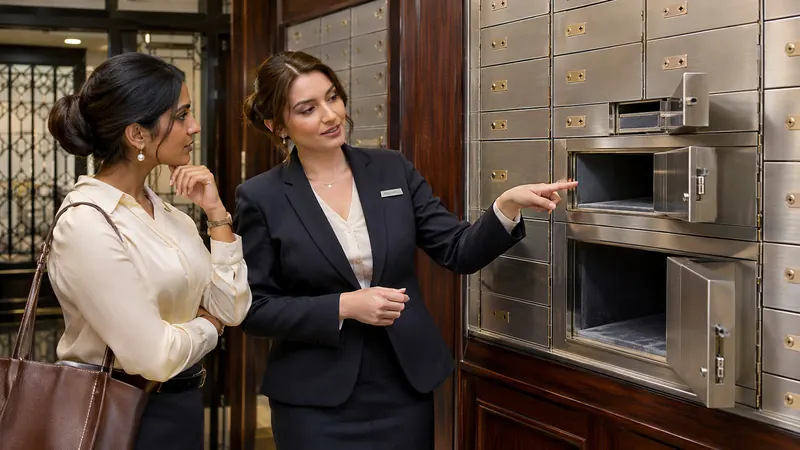
Who needs a bank account for non-residents in Grenada
Buyers of land and villas at Grand Anse or on the Lance aux Épines peninsula come first. They need a local account to pay hurricane insurance, property tax and caretakers. Managers of holiday rentals, who collect rent in dollars, have comparable needs and sometimes ask for a second account for guest deposits.
Students of St George's University, one of the Caribbean's largest medical schools, form a distinct group, mostly American, that banks understand well. Skippers based at Port Louis or Prickly Bay marinas and citizenship-by-investment participants, who open an account once their passport is issued, complete the picture.
Some owners also use a local account to receive insurance payouts after storm damage, or to pay contractors who work on repairs. A bank that already knows the account holder will often handle such sums faster than one meeting the customer for the first time, so open the account before it is urgently needed.
Documents required for a bank account for non-residents
The file consists of a valid passport, a second identity document, recent proof of address, usually a utility bill or a bank statement under three months old, and two references, one of them from a bank. Some banks add a police certificate, an employer letter or, for students, an enrolment confirmation.
Source of funds is reviewed closely: payslips, tax assessments, a property sale deed or a rental agreement. Documents in another language need translation, and copies should be certified. An opening deposit is usually required, ranging from a few hundred to a few thousand dollars depending on the bank and the account chosen.
The bank may also ask about the intended use: expected monthly deposits, the countries sending money and whether any cash will be paid in. Provide figures you can support with documents. An answer far from what the account later shows is a common trigger for a review.
Banks in St George's and Carriacou
Grenada Co-operative Bank is the oldest local institution, with branches on the main island and in Carriacou. Republic Bank (Grenada), Scotiabank and CIBC Caribbean provide card, transfer and online services closer to international norms. First Citizens also operates in the market.
Appetite for non-resident clients is not identical across banks. Subsidiaries of international groups apply parent-company rules, sometimes stricter, which lengthens processing but clarifies the document list. Local institutions can be more flexible with a customer introduced by a lawyer or notary based on the island.
Branch sizes differ. The main branches in St George's offer a full range of services, while those in Carriacou may have limited opening hours and lower cash holdings. If you plan to spend time in Carriacou, check cash withdrawal limits and how to obtain a replacement card there.
The role of a local lawyer or agent
A lawyer registered in St George's can introduce the client, certify copies and attend the signing. Fees come on top of bank charges, but a lawyer often saves a second trip. Ask for a written quotation and confirm the person's standing with the island's bar.
Remote opening of a bank account for non-residents
Most banks accept first contact by email but demand identity checks stronger than a simple scan. Forms are signed before an authorised person or in branch during a stay. A few institutions have introduced digital onboarding, generally for customers already known to them.
If you are travelling, announce your arrival date and the person who will receive you. Flights into Maurice Bishop International Airport from Europe usually connect through London, the French Caribbean or North America. The island keeps UTC-4 all year round, and branches close early at the end of the week.
Representatives such as lawyers can submit documents and pick up cards, but banks usually insist that the account holder personally confirm identity at least once. Video verification is accepted by some institutions for existing customers and is rarely extended to a first application.
Compliance, FATCA and automatic exchange
Grenada follows the recommendations of the Caribbean Financial Action Task Force. Banks collect each holder's tax number and country of residence under the Common Reporting Standard. US citizens complete FATCA forms, which lengthens the review a little.
An account in Grenada is not forbidden for someone resident in the United Kingdom, yet it must be declared to the home tax authority according to its rules. The local regulator, GARFIN, supervises financial institutions. A bank may ask for extra evidence if account movements do not match the activity described at opening.
Declaring a foreign account at home
Many tax systems, including those of the United Kingdom, Canada and the European Union members, expect residents to report accounts abroad, with penalties for omission. Thresholds vary. The holder remains responsible for the declaration, whatever information the bank transmits automatically.
Checks and questions before opening
Ask for the fee schedule: account maintenance, minimum balance, incoming and outgoing wires, international card, paper statements. Check whether the account earns interest, whether online banking exists and in what language statements are produced. Find out whether deposits are covered by the regional insurance scheme.
Clarify what could lead to closure, such as inactivity, expired documents or unusual flows. Request in writing the current document list for your status, the processing time and the delay for receiving a card. Keep a record of exchanges, because internal instructions evolve regularly.
Think also about the exit: how to close the account, how quickly funds can be returned abroad, and whether a dormant account will attract fees. A frozen account needs updated papers sent from your country of residence, which takes time, so keep documents current.
Banks and providers to open this account
- Grenada Co-operative Bank — Local co-operative bank with branches in St George's and Carriacou, offering XCD accounts and online services.
- Republic Bank (Grenada) — Subsidiary of Republic Financial Holdings providing accounts, cards and international transfers.
- Scotiabank Grenada — Island arm of the Canadian Scotiabank group, with current and savings accounts.
- CIBC Caribbean — Regional bank of the Canadian CIBC group, present in several Eastern Caribbean islands.
- Grenada Citizenship by Investment — Official body giving information on the citizenship-by-investment programme and licensed agents.