
Marshall Islands: opening a bank account for non-residents
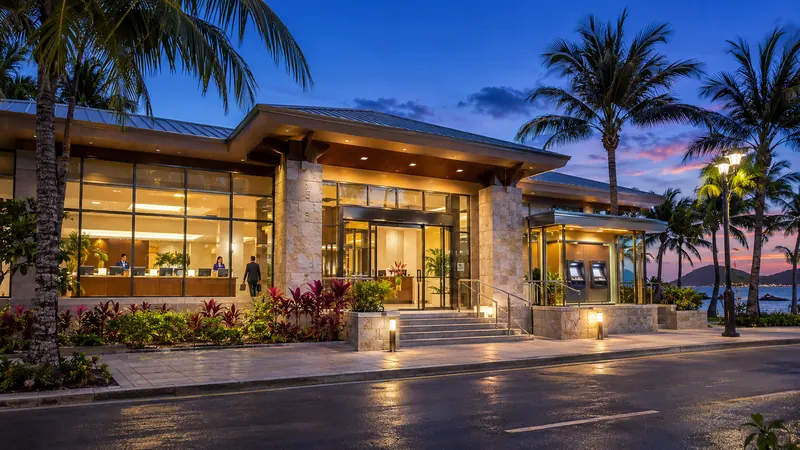
Marshall Islands: a bank account for non-residents is a deposit account opened in Majuro or Ebeye by someone who does not live in the republic, in US dollars, the currency in use. The banking sector is very small: two or three institutions provide most services, under the supervision of the Marshall Islands Banking Commission. Banks ask for a passport, proof of address, references and evidence of where the funds come from. The reception given to foreign clients with no local link remains cautious.
A Pacific republic that uses the US dollar
The Republic of the Marshall Islands is a Micronesian state whose capital, Majuro, is a low-lying atoll. It is tied to the United States by a compact of free association, which provides financial assistance and the use of the US dollar as currency. There is no central bank and no national currency: notes and coins are those of the United States.
The economy depends on US aid, fishing, fees from one of the world’s largest ship registries and the military presence at Kwajalein. Income from the ship registry and from non-resident companies feeds a corporate services industry, but retail banking remains modest.
The time zone is UTC+12. The gap with London is twelve hours in winter and eleven in summer. English is an official language alongside Marshallese, and it is the language of banking.
The atoll geography matters for daily banking. Majuro is a narrow ribbon of land, and the outer islands are reached by occasional flights or boats, so physical access to branches and cash machines is limited to a few places.
Who can open a bank account for non-residents in the Marshall Islands
The small number of banks limits access. They serve residents first, along with public officials, staff of international organisations and local companies. A non-resident needs to justify a link with the islands: a professional activity, a planned assignment, family ties or the business of a company on the registry.
Banks are under strong pressure from their US correspondent banks. After years of de-risking, they examine foreign clients, offshore structures and registry-related flows with care. Non-resident companies looking for an account on the spot often meet refusals.
A client who moves for a few months, for example on an assignment for an agency or a non-governmental organisation, finds a solution more easily than a remote investor.
Having a local sponsor, such as an employer, a host organisation or a resident relative, helps considerably, because the bank can confirm the applicant’s story with a person it already knows.

Documents usually requested
The file includes a valid passport, recent proof of address in the country of residence and a second identity document. Banks also ask for bank references, a letter from the employer or the organisation sending the client, and the tax number of the country of residence.
For a US citizen or a person linked to the United States, the bank collects US tax forms, which is routine for institutions tied to the American banking system. For others, the source of funds is documented by payslips, statements or contracts.
Companies provide their articles of association, a certificate of incorporation, the list of beneficial owners and directors’ identification, apostilled where necessary.
Banks may also ask for a short written explanation of the intended use of the account, with the expected monthly amounts and the countries from which payments will come. Consistent figures across documents speed up the review.
Non-resident companies registered in the Marshall Islands
A non-resident company registered in the Marshall Islands does not automatically obtain a local account. Many such companies open their account in another jurisdiction, with a bank that accepts their activity. Local banks ask for evidence of real activity and a link with the islands.
Banks in the republic
Bank of Guam, of Guamanian origin, has branches in Majuro and Ebeye. It has a long presence in the region and a network across Micronesia. The Bank of the Marshall Islands, a local bank, is the main institution with Marshallese capital and serves customers across the islands.
Some third-party sources also name US banks among institutions linked to the archipelago, but their local retail offer is very limited, and their actual presence should be checked before starting any procedure. The Marshall Islands Development Bank is a development institution and does not meet the needs of a non-resident.
Offshore company formation providers describe account opening, but their role is limited to orientation. The bank alone decides whether to accept or refuse.
Because choice is so limited, the practical differences between banks lie in branch location, minimum balances and willingness to onboard foreign clients, rather than in a broad range of products.
Opening a bank account for non-residents remotely or in person
Remote opening is unlikely. Banks generally require a personal visit for identification, with original documents. The journey is long and costly: Majuro is served by a small number of flights from Honolulu, Guam and a few other Pacific stops.
A prior email shows whether the bank will consider the application. A written reply is preferable before booking a ticket. Opening times range from a few days to several weeks.
A local representative with a legalised power of attorney is sometimes accepted. This option depends on the bank’s policy and the type of account.
Alternatives for a client with no project on the spot
A client whose activity does not run through the islands often does better opening an account in a better-equipped neighbouring country such as Guam, Hawaii or Fiji, and then using that account for payments linked to the Marshall Islands. The decision depends on each person’s circumstances.
Tax, compliance and information exchange
The Marshall Islands have reinforced their anti-money-laundering framework and corporate transparency under pressure from international bodies and correspondent banks. Banks collect their clients’ tax residence and may pass information to the competent authorities.
An account held in Majuro, in US dollars, must be reported in the holder’s country of residence where that country’s law requires it. US citizens remain subject to their reporting obligations wherever they live. A tax adviser can clarify the position.
International transfers pass through US correspondent banks, which examine flows to the Marshall Islands closely. Delays and requests for supporting documents are frequent.
Correspondent bank de-risking
US banks that clear dollar payments have reduced their exposure to several small Pacific economies. Marshallese banks rely on few correspondents, which makes them cautious about unusual flows. A client who explains the nature of each payment, with documents in support, limits the risk of blockages.
Fees and everyday use
Maintenance fees and commissions on international transfers are higher than in large financial centres, because of the low volume. Bank cheques, remittances and exchange services are charged separately.
Debit cards work in shops in Majuro and at the few cash machines on the atoll. On the outer islands, cash payment is the rule. Online services exist, but their availability and stability depend on the international connection.
An inactive account may be closed. Ask the bank about its rules.
Cash handling also carries costs: counting and depositing large amounts of banknotes may be limited or charged, so planning deposits in advance with the branch is sensible.
Checks to make before starting procedures
Before booking a trip, obtain a written answer from the bank: does it accept non-residents in the applicant’s situation, which documents does it require, and what minimum deposit does it apply?
The holder asks about maintenance fees, transfer commissions, how online banking works from abroad, limits and the treatment of inactive accounts.
Finally, learn about reporting duties in the country of residence and keep all opening papers. Correspondent bank rules change, so checking conditions before any large transfer avoids unpleasant surprises.
Banks and providers to open this account
- Bank of Guam — Bank of Guamanian origin with branches in Majuro and Ebeye.
- Bank of the Marshall Islands (BMI) — Local bank with Marshallese capital serving individuals and businesses.
- BBCIncorp — Company formation provider publishing information on bank accounts linked to the Marshall Islands.
- Offshore Company Corp — Offshore company services provider with guides to banks in the Marshall Islands.