
Montenegro: Open a Bank Account for Non-Residents

Montenegro open a bank account for non-residents is a request that a foreigner without residence can submit to a local bank, most often to buy property, set up a company or receive local income. The country uses the euro without belonging to the eurozone, under the supervision of the Central Bank of Montenegro. Banks expect a passport, proof of address abroad, evidence of the origin of funds and a credible purpose, with timing and conditions that differ from one lender to the next.
The euro without the eurozone
Montenegro replaced the German mark with the euro in 2002 without signing a monetary agreement with the European Union. The Central Bank of Montenegro, based in Podgorica, supervises banks but does not issue currency and cannot act as lender of last resort. For a foreign account holder the benefit is clear: a euro account removes exchange risk on transfers coming from Europe.
An EU candidate since 2010 and a NATO member since 2017, the country is gradually aligning its rules with those of the Union. The sector counts around a dozen banks, most of them owned by foreign groups, notably from Slovenia, Hungary and Austria.
Tourism makes up a major share of the economy, which explains why coastal banks handle many foreign customers every summer. Branches in Budva, Bar and Tivat are more used to non-resident files than those inland, where English is less common.
Why foreigners open an account
The Adriatic coast, from Budva to Kotor and Herceg Novi, draws second-home buyers from France, Belgium, Switzerland and Russia. Notaries and estate agents often ask for a local account to pay building charges, property tax and electricity bills. Entrepreneurs and freelancers who register a limited liability company also need a business account.
The reason for opening is the bank’s main criterion. A documented project, such as a preliminary sales agreement, a lease or company papers, is received better than a request with no justification.
Property purchase and a dedicated account
When buying on the coast, the seller generally asks for a transfer to a Montenegrin account or a foreign bank, and the notary checks where the money comes from. A local account makes it easier to pay transfer taxes, fees and building charges. It also simplifies collecting seasonal rent, which is taxed in Montenegro even when the owner lives elsewhere.
Documents for a bank account for non-residents
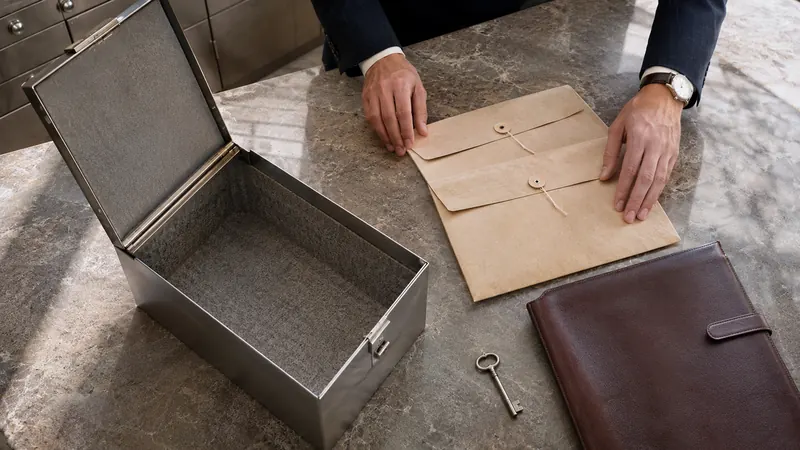
The typical list includes a valid passport, a recent proof of address outside Montenegro, a document showing professional status, a declaration on the origin of funds and the tax number of the country of residence. A sales deed or reservation contract serves as support when the opening accompanies a purchase.
A local company owner adds the commercial register extract, the articles of association, the identity papers of directors and the list of beneficial owners. Foreign documents may need an apostille and a translation into Montenegrin by a court interpreter based in the country.
Applicants who hold a Montenegrin tax number, which the tax administration issues to foreign property owners and company founders, tend to see their files processed more smoothly, so it is worth asking the notary or the accountant to obtain it before visiting the bank.
Physical presence and signing
Most banks require a visit to a branch for identity verification. A notarised power of attorney with an apostille is sometimes accepted, yet institutions applying enhanced due diligence prefer to meet the client. Planning a stay of at least two or three days avoids returning home too early without an account.
Banks frequently mentioned
Crnogorska komercijalna banka, known as CKB and part of Hungary’s OTP group, is one of the largest. NLB Banka Podgorica, Erste Bank Montenegro, Lovćen banka, Hipotekarna banka and Adriatic Bank are also common choices for individuals and companies.
Each institution sets its own acceptance threshold. Some banks limit new clients from sanctioned countries or high-risk jurisdictions, and others ask for a minimum balance at opening. Comparing two or three banks before travelling prevents wasted time on the spot.
Clients whose activity touches gambling, cryptocurrencies or commodity trading are examined more closely. It is better to present the activity plainly and supply contracts and invoices than to let the bank guess what kind of flows to expect on the account.
Group subsidiary or local bank
A subsidiary of a European group applies standardised procedures and often offers online banking in English. A more local bank can act faster, but remote service quality varies. The right choice depends on the need: a stay account, a property account or a company account.
Taxes and information exchange
Interest on savings accounts may bear Montenegrin withholding tax, and the bank can state the rate. The country has signed double-taxation treaties with several European states, including France, which can ease the burden for the account holder.
Montenegro takes part in automatic exchange of tax information under the Common Reporting Standard and applies FATCA rules with the United States. A foreigner’s balances may therefore be passed to the tax authority at home. A French tax resident declares the foreign account on the annual return.
Interest, rent and local income
Rent received on a Montenegrin account falls under local income tax on real estate, and a non-resident owner must report this income to the tax authority. Dividends from a local company are also subject to withholding. A tax adviser in the country can work out the total burden and say whether the treaty with the home country gives a tax credit.
Vigilance, risks and obstacles
Montenegro has been monitored by the Financial Action Task Force because of weaknesses in anti-money-laundering controls, and its status moves with each evaluation. Banks have tightened checks, especially since the inflow of capital and of Russian, Ukrainian and Belarusian nationals that began in 2022.
Refusals come from poorly justified funds, a sensitive activity, links with sanctioned persons or an incomplete file. A client may receive a negative answer without detailed explanation, since the bank is not obliged to give reasons.
Banks may also ask for an updated file when the holder changes address or when unusual movements appear. A quick reply to compliance questions avoids a temporary freeze, an unpleasant situation for an owner who must settle local bills.
Fees, cards and online banking
Maintenance fees, a Visa or Mastercard debit card and international transfers make up most of the annual cost. Euro payments from the European Union travel through correspondent banks, taking one to three working days. Withdrawals at another bank’s cash machine sometimes carry a commission.
A mobile app and web access are common, but activation often needs a Montenegrin phone number to receive codes. Ask whether a foreign number is accepted, because this decides whether the account is usable from France, Belgium or Switzerland.
Keep in mind that card limits for online payments and cash withdrawals are often lower for new customers, and can usually be raised after a few months of regular account activity.
Checks before opening a bank account for non-residents
Ask the bank about the exact documents, the apostille, translation, minimum balance, physical presence, account currency and usual timing. State the purpose and ask whether your nationality and country of residence are accepted.
Have the monthly fees, withdrawal ceilings, online access from abroad and closing procedure confirmed in writing. Finally, ask which documents will be requested at the periodic refresh of the file, so the account stays in good standing.
Banks and providers to open this account
- Crnogorska komercijalna banka (CKB) — Large Podgorica bank, part of the OTP group, with euro accounts for individuals and companies.
- NLB Banka Podgorica — Subsidiary of Slovenia’s NLB group offering current accounts, cards and corporate services.
- Erste Bank Montenegro — Subsidiary of Austria’s Erste group with accounts and online banking.
- Lovćen banka — Mid-sized Montenegrin bank open to individuals and small businesses.
- Hipotekarna banka — Local Podgorica bank active in accounts, cards and mortgage lending.