
San Marino: Open a Bank Account for Non-Residents
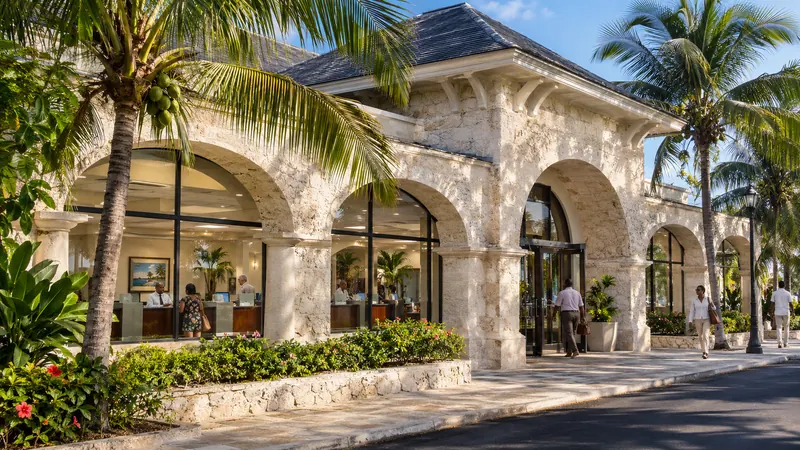
San Marino open bank account for non-residents requests are accepted by banks in the small republic surrounded by Italy, provided the foreigner shows a clear link with the territory and a well-documented source of funds. The currency is the euro under a monetary agreement with the European Union, and the Central Bank of the Republic of San Marino supervises the sector. A passport, proof of address, the purpose of the account and tax declarations make up the file, with timing and conditions that differ between banks.
A republic of 61 square kilometres inside Italy
San Marino occupies a 61-square-kilometre enclave between Emilia-Romagna and Marche, home to about 34,000 people. It is one of the oldest republics in the world, and its capital, perched on Mount Titano, is a UNESCO World Heritage site. The official language is Italian, and the economy relies on financial services, tourism, light industry and trade with neighbouring Italy.
The banking sector has changed deeply since the 2008 crisis: mergers, clean-ups and stronger supervision have reduced the number of institutions. The Central Bank of the Republic of San Marino, the BCSM, oversees local banks and financial companies.
The country has no major commercial airport, and economic life remains tied to the Italian city of Rimini. Italian cross-border workers make up a significant share of employees, which explains the strong presence of Italian customers in local banks.
Language, access and life on site
Procedures take place in Italian, and most branches are found in Città di San Marino, Borgo Maggiore and Serravalle. Visitors reach the territory through Rimini, about twenty kilometres away, served by an airport and by the Adriatic railway line. There are no systematic checks at the border with Italy, which makes bank visits easy to organise.
Euro, SEPA and the monetary framework
San Marino uses the euro without belonging to the European Union or the eurozone, thanks to a monetary agreement signed with the Union in 2000 and updated in 2012. The country may mint a limited number of national coins. Bank accounts carry an IBAN starting with SM and take part in the SEPA payment scheme, which eases transfers from Italy, France or Germany.
Negotiations on an association agreement with the European Union aim to open the financial sector further to European rules. That trend obliges banks to follow directives on money-laundering controls and tax transparency.
Because the euro circulates freely, a San Marino account can be funded from anywhere in the SEPA area without conversion costs, a practical benefit for owners and workers paid in euros.

Documents for a bank account for non-residents
San Marino banks ask for a valid passport or identity card, a recent proof of address abroad, a tax document from the country of residence, a declaration on the origin of funds and the purpose of the account. Evidence of a link with the territory, such as a property deed, an employment contract, a business project or a relationship with a local partner, speeds up the review.
Foreign documents may need an Italian translation. A San Marino notary or lawyer sometimes prepares the papers and accompanies the client to the bank, for fees that should be compared before committing.
Non-Italian nationals who have never stayed in the Republic must explain why they choose San Marino instead of a bank in their own country. A concrete answer tied to a property, a partner or a project works better than a general statement.
Physical presence and length of the process
Most banks want to meet the client at least once, since identity checks and the compliance questionnaire take place in a branch. Timing runs from a few days to several weeks. A two-day visit with an appointment booked in advance is often enough when the file is complete.
Banks that come up often
Institutions of the Republic include Banca di San Marino, Cassa di Risparmio della Repubblica di San Marino, known as Carisp, Banca Agricola Commerciale, the BAC, and Banca Sammarinese di Investimento. They have their head offices in San Marino or Borgo Maggiore, and most keep branches in the main villages.
Each takes its own view of non-residents. Banks most open to foreigners favour clients with a clear project, for example a property purchase, a company set-up or a professional activity on site. Requests with no precise project are refused more often.
San Marino banks remain small institutions, which gives them some flexibility in studying an individual file but limits the range of investment and lending services. A client who wants a mortgage or portfolio management should check whether the bank offers these products to non-residents.
Language matters here, because contracts are drafted in Italian and the translated summary offered in English is usually not legally binding.
Nearby Italian banks
Many non-residents prefer an account in Italy, in Rimini or Cesena, a few kilometres from the border. Italian banks have established procedures for foreigners, but they generally ask for an Italian codice fiscale. The choice between an account in San Marino and one next door depends on purpose and taxation.
Taxes, transparency and reputation
San Marino once appeared on OECD lists of uncooperative jurisdictions and long carried the image of a tax haven. Since then the Republic has signed information-exchange agreements, notably with Italy, and applies the Common Reporting Standard together with a FATCA agreement with the United States. A foreigner’s balances and interest are therefore reported to the tax authority at home.
The holder remains taxable in the country of residence on income from the account. A French tax resident declares an account held abroad every year. The country also applies withholding tax on certain interest income, and the bank states the rate according to the client’s situation.
Italian rules and the 2009 agreement
Relations with Italy weigh heavily: a 2009 agreement on tax information exchange ended practices that let Italians hide assets, and regularisation schemes followed. A holder who is Italian or linked to Italy should therefore expect particularly careful checks from banks in the Republic.
Fees, cards and daily use
Account fees are comparable to those of a mid-sized Italian bank. Euro transfers within the SEPA area follow the usual one to two working days. A debit card, often Visa or Mastercard, is issued at opening, and the mobile app lets customers check transactions.
Online services are written in Italian, sometimes in English. Banks offer current accounts, deposit accounts and investment products, but their range is narrower than that of large European groups, which leads some holders to keep another account elsewhere.
For large deposits, the bank may ask for an additional document, such as a sales deed, an earlier account statement or a letter from an employer. This requirement does not target any one client: it follows from anti-money-laundering rules applied to every institution.
Checks before opening a bank account for non-residents
Ask the bank about the link with the territory it requires, the document list, translation, minimum deposit and whether you must appear in person. State the purpose of the account, the origin of funds and the kind of flows you expect.
Have the monthly fees, card limits, online access from abroad, tax treatment of interest and closing terms confirmed in writing. A tax adviser in your country of residence can then assess the account’s value against your reporting duties.
It is also sensible to ask how the bank communicates: statements may be sent only through the online portal, and security codes may be tied to a local mobile number or a physical token collected in the branch.
Banks and providers to open this account
- Banca di San Marino — Bank of the Republic offering current accounts, savings, cards and corporate services.
- Cassa di Risparmio della Repubblica di San Marino (Carisp) — Historic San Marino savings bank with branches across the territory and online banking.
- Banca Agricola Commerciale (BAC) — Commercial bank of San Marino offering accounts, loans and payment services to individuals and companies.
- Banca Sammarinese di Investimento (BSI) — Bank of the Republic geared toward investments, wealth management and business services.