
Niger: open a bank account for non-residents

Niger: opening a bank account for non-residents means entrusting savings to a bank licensed within the West African monetary union, in Niamey or elsewhere, while living outside the country. Customers include Nigeriens abroad, traders on the corridors to Benin and Nigeria, mining and oil contractors and aid workers. Accounts are kept in CFA francs, sometimes in foreign currency. Banks apply the regional rules and their own policies on identification, source of funds and the purpose of the account. Approval depends on the applicant’s status, the paperwork and the checks run by the bank.
CFA franc, regional central bank and supervision
Niger uses the West African CFA franc (XOF), issued by the Central Bank of West African States and pegged to the euro at 655.957 francs. The central bank has a national directorate in Niamey, while the Banking Commission of the union supervises lenders. A holder with euro income therefore faces no exchange-rate risk between the euro and the account currency, although fees on conversion remain.
The regional exchange regulations apply to payments leaving the union. A supporting document, such as an invoice or contract, is requested for most transfers, and bulk movements of cash across borders are monitored. Payments within the union circulate more smoothly, which suits households whose members live in Niger, Côte d’Ivoire and Senegal.
The union’s regulations also set minimum capital and liquidity requirements for banks, and a list of approved institutions is published by the central bank. Looking up a bank on this list is an easy first check that it is licensed to take deposits from non-residents.
Sanctions, political change and banking conditions
After the July 2023 change of government, neighbouring states and the regional bloc imposed financial and trade measures that were lifted in February 2024. During that period, banks in Niger faced liquidity pressure and limits on regional payments. In January 2025 the country left the Economic Community of West African States, while remaining in the monetary union.
A non-resident planning to open an account should check the current situation, including any restrictions on transfers or on particular banks. Foreign correspondent banks may ask additional questions on payments to or from Niger. Choosing a bank owned by a large pan-African group can offer more resilience, because the parent can often support liquidity and compliance.
Customers who work for the United Nations or international organisations may receive salaries by transfer in dollars or euros. They should ask whether the bank can accept these funds in a foreign-currency account and what documents it needs to release them in CFA francs.
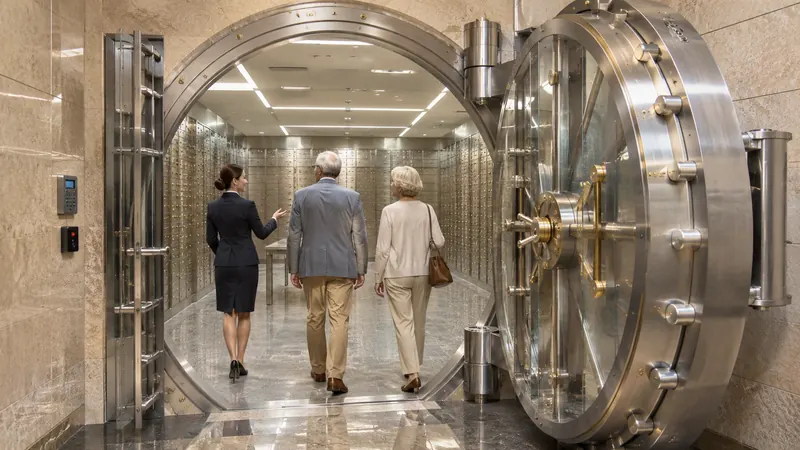
People who open a bank account for non-residents in Niger
Nigeriens living in France, Libya, Côte d’Ivoire, Saudi Arabia and elsewhere send money home for housing, livestock and family events. Traders and transport companies operating on the Niamey–Cotonou, Niamey–Lomé and Maradi–Kano axes need local accounts to pay suppliers and fees. Staff of mining companies in Arlit and oil operators in Agadem make up another group.
Humanitarian agencies and development organisations also operate accounts, usually under institutional arrangements. Banks distinguish residents from non-residents, and the declaration is recorded on the form. It affects the limits, the documents needed for transfers and the approval process, so the customer should confirm the category before submitting the file.
Documents prepared abroad often need an apostille or legalisation, and translation by a sworn translator adds time. Starting these steps early, and sending electronic copies for a preliminary review, can reduce delays once the original papers reach Niamey.
Documents and procedures
Individuals provide a valid passport or national identity card, proof of address abroad, photographs and an explanation of the origin of funds, supported by a pay slip, contract or sale deed. Banks may ask for a nationality certificate or residence permit. French is the working language, so English or Arabic documents may require a sworn translation.
Companies present their registration papers, trade register extract, tax identification, details of directors and beneficial owners, and a resolution authorising the account. Some branches demand the account holder’s presence for the signature, others accept a relative or agent with a notarised mandate. The process can take several weeks, and the bank decides without guarantee.
Notarised mandates
A relative in Niamey is often named as agent for withdrawals and statements. The mandate should state the powers precisely and be notarised, ideally legalised by a Nigerien consulate. The bank will keep the agent’s signature and identity documents on file.
Funds from abroad and tracing
Because banks must trace the origin of money, account holders should use the same name on transfers as on the account and give a clear reference for each payment. A short email to the bank explaining a large incoming transfer often speeds up credit.
Currencies, cash and mobile payments
The CFA franc account serves ordinary needs, from rent to school fees. Some banks open euro or dollar accounts for customers with foreign income, after checking the source of funds and the exchange rules. Cross-border transfers from such accounts are limited by purpose and supporting documents. Savings accounts and term deposits offer modest interest rates that vary by bank.
Cash dominates outside the capital, and cash machines are found mainly in Niamey, Maradi, Zinder and Agadez. Mobile money services, including Airtel Money, Moov Money and Orange Money, are growing and handle small transfers and bills. They need a registered local SIM and are best seen as a complement to a bank account.
A branch’s opening hours and the availability of foreign-currency cash vary, so travellers should ask beforehand. Using bank transfers instead of cash reduces the risk of loss and generates the records that are useful later for tax purposes.
Safety of cash and travel
Carrying large amounts of cash is risky and may require a declaration at the border. Where possible, funds should travel by bank transfer. Travel advisories for parts of the country change frequently, so account holders who plan a visit should check them in advance and confirm the opening hours of the branch.
Banks operating in Niger
The market includes Bank of Africa Niger, Ecobank Niger, Orabank Niger, BIA Niger, Sonibank and a few other institutions. Branches cluster in Niamey and in regional capitals. Pan-African groups provide international payment capacity, while local banks may offer closer contact with small traders.
Comparison should cover fees, internet banking, processing time for international wires and the presence of staff able to handle English-language queries. A written fee schedule, requested before opening, helps to compare offers on a like-for-like basis.
Customers who are employees of public institutions or members of political parties may be treated as politically exposed persons, which does not prevent the opening of an account but triggers additional documentation and periodic reviews by compliance officers.
Compliance and tax reporting
Customer due diligence applies, including beneficial ownership checks, screening of politically exposed persons and monitoring of transactions. Large cash deposits and unclear sources of wealth lead to extra questions. International monitoring lists change over time, so applicants should check the current position.
Holders remain accountable to the tax authority of the country where they live. Many states require the declaration of overseas accounts, and automatic exchange of information may apply. Banks collect tax residency self-certification and ask United States persons for an extra form. Questions on interest and inheritance should go to a qualified adviser.
What to check before opening a bank account for non-residents
Request a written tariff covering monthly fees, incoming and outgoing wires, minimum balance, dormant accounts and closure charges. Ask whether the application can be made remotely and how long the review takes.
Check the available currencies, card limits, online banking and the way to appoint an agent. Keep a copy of the signed contract, the account number, the SWIFT code and the name of the contact person at the bank.
Banks and providers to open this account
- Bank of Africa Niger — Nigerien subsidiary of the Bank of Africa group, present in Niamey and several regions.
- Ecobank Niger — Local arm of the pan-African Ecobank group, serving companies, institutions and individuals.
- Orabank Niger — Bank of the Oragroup network offering current accounts and corporate services.
- BIA Niger — Commercial bank based in Niamey, known as Banque Internationale pour l’Afrique au Niger.
- Sonibank — Nigerien bank offering accounts for individuals, traders and businesses.