
Mozambique: open a bank account for non-residents

Mozambique: opening a bank account for non-residents means keeping funds with a bank licensed by the Bank of Mozambique, in Maputo, Beira or another city, while living abroad. The holder can be an investor in energy or farming, an expatriate employee, a Mozambican based overseas or a property owner. Accounts are held in meticais or in foreign currency under the exchange rules. Banks require identification, a tax number in many cases and an explanation of where the money comes from. Approval depends on the status of the applicant and the clarity of the paperwork supplied.
Meticais and the exchange control framework
Mozambique uses the metical (MZN, plural meticais), issued by the Banco de Moçambique. The rate floats within limits, and the central bank intervenes to curb volatility, especially when demand for dollars spikes around large project payments or import settlements. South Africa is the country’s main trading partner, so both the rand and the dollar influence price setting.
The exchange law permits current payments such as imports, services and wages on proof of the underlying transaction, while capital operations require registration or approval. Foreign direct investment is normally recorded with the authorities, which is what later allows profits and capital to be repatriated. A non-resident who ignores registration can find transfers blocked when the time comes to move funds out.
The central bank publishes reference rates, and the real cost of a transaction depends on the margin the commercial bank applies. Asking for the exact rate and commission in advance, and comparing it with rates quoted by two other banks, is a simple way to avoid hidden costs on larger transfers.
Who needs an account but lives elsewhere
The profile ranges from engineers and logisticians linked to liquefied natural gas projects in the north to tourism entrepreneurs in Inhambane and the Bazaruto archipelago. Farmers in Zambézia, miners in Tete and traders using the Nacala and Beira corridors also hold accounts. Mozambican families in Portugal, South Africa and the United Kingdom are another large group, using accounts for remittances and construction.
Classification matters: a person who holds a residence document and lives in the country most of the year is generally regarded as a resident, whereas someone who visits for short periods is a non-resident. The distinction affects the types of account available, the paperwork required and the limits that apply to transfers abroad, so it is wise to confirm the category with the bank.
Another group consists of companies in oil services, hydropower, coal and agriculture, whose staff are paid through local accounts. The treatment of employees who are on rotation is a point to clarify with the bank, as some rely on the employer’s bulk-payment facility rather than opening separate individual accounts.
Documents for a bank account for non-residents in Mozambique
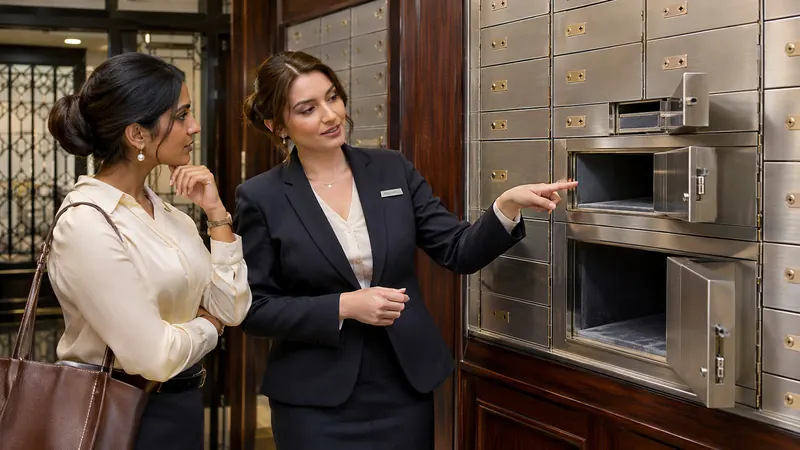
A typical file includes a valid passport, proof of address abroad, a visa or residence permit where relevant, and the NUIT, the single tax identification number issued by the tax authority. Banks also ask for an employment contract, a sale agreement or a business plan that explains why an account is needed. Portuguese is the working language, and documents drafted in English or French may need a sworn translation.
Companies provide the incorporation certificate, articles, a trade registry extract, proof of local registration, identification of directors and ultimate owners, and a resolution authorising the opening. Some branches require the first visit in person, others will deal with a lawyer or accountant acting under a notarised mandate. Approval is never guaranteed, and review can take several weeks.
Documents certified abroad are accepted more readily when accompanied by an apostille, and electronic copies sent by email are often a first step before original documents are requested. Preparing a complete folder, including translations, shortens the review and reduces the number of back-and-forth messages with compliance staff.
Getting a NUIT as a non-resident
Applicants usually obtain the NUIT from the tax authority with a passport and a local address, which can be that of a representative or a law firm. Many foreign investors have a local accountant register them. The number is then used on bank forms, tax returns and invoices.
Meticais, dollars and rand: choosing the currency
A metical account suits local spending: rent, wages, utilities and small purchases. Foreign-currency accounts in dollars, euros or rand fit payments from abroad and protect value against depreciation. Banks apply distinct rules to accounts of non-residents and foreign residents, including limits on sending funds out and requirements for supporting documents.
Mobile money is widespread. M-Pesa, e-Mola and mKesh handle everyday payments and small remittances, although they rely on a local SIM and identification. For the holder living abroad, a bank account remains the main tool, with the mobile wallet serving relatives who need to spend small sums quickly in the country.
When funds arrive from abroad, the bank may ask for the sender’s name and the reason for the payment. Using the same name as on the account and clear references helps avoid delays. Holders who plan to repatriate funds should keep every credit advice, since these records support the later outward transfer.
Cards and cash use
International card acceptance is good in Maputo, Beira and tourist spots but limited in rural areas. Cash machines may impose daily limits. Before travelling, ask the bank about withdrawal ceilings, foreign transaction fees and how to block a lost card quickly while abroad.
Banks operating in Maputo, Beira and Nampula
The sector is led by Millennium bim, BCI, Standard Bank Moçambique and Absa Bank Moçambique, with Moza Banco, FNB Moçambique and Banco Único also active. Millennium bim and BCI have the largest retail networks, while the South African groups have strong corporate and trade-finance desks that serve foreign firms.
What differs is the experience of non-resident customers. Some banks assign an English-speaking relationship manager to business accounts, while neighbourhood branches operate largely in Portuguese. Important comparison points include online banking quality, transfer speed, service fees and the presence of branches near the places the holder will visit.
The country’s geography matters: Maputo is far from Pemba and Tete, and branch coverage in remote districts is limited. Customers should ask whether the bank offers internet and mobile banking in English, whether statements can be sent by email and what the process is for resolving disputes remotely.
Grey list history, due diligence and tax
Mozambique was placed on the Financial Action Task Force grey list in 2022 and, according to the group’s announcements, left it in October 2025. Banks kept strong controls on beneficial ownership, politically exposed persons and source of funds, and the current status should be checked before applying. Security issues in the north can also influence how correspondent banks view some payments.
Holders remain subject to the tax laws of the country where they live. Many states require the reporting of foreign accounts, and automatic exchange of information may apply. Banks collect self-certifications of tax residence, with additional forms for United States persons. An adviser should be consulted for questions on interest, rental income or capital gains.
Politically exposed persons and certain sectors, such as extractive industries, are subject to enhanced checks. Declaring ownership and expected activity clearly at the start reduces the likelihood of delays when payments start flowing through the account.
Remittances and money-transfer services
Families abroad often use global transfer operators or mobile wallets for small amounts. A bank account is more suitable for larger or regular flows because it creates a clear record and simplifies later requests for funds to be sent back out.
Checks before you open a bank account for non-residents
Ask for the full tariff, including monthly fees, incoming and outgoing wire charges, minimum balance, dormant-account policy and exit costs. Find out whether a remote application is possible and whether the NUIT is needed at the outset.
Also confirm which currencies are available, card limits, online banking language, and the procedure for naming an agent. Keep the signed contract, the IBAN and SWIFT details and the name of the relationship manager, so that questions can be resolved quickly when funds are in transit.
Banks and providers to open this account
- Millennium bim — Leading Mozambican bank in the Millennium bcp group, with a national branch network and online banking.
- BCI – Banco Comercial e de Investimentos — Large commercial bank offering accounts for individuals and businesses.
- Standard Bank Mozambique — Local arm of Standard Bank Group, strong in corporate and investment banking.
- Absa Bank Mozambique — Mozambican subsidiary of Absa, serving retail and corporate customers.
- Moza Banco — National commercial bank with retail and business accounts.