
Slovakia: Open a Bank Account for Non-Residents

Slovakia open a bank account for non-residents is a request open to foreigners who live elsewhere, with softer conditions for a citizen of the European Union than for a national of a third country. Slovakia has used the euro since 2009, and the National Bank of Slovakia supervises the sector. Banks ask for an identity document, proof of address abroad, the origin of funds and the purpose of the account, with requirements that sometimes differ by institution and by the type of product requested.
A eurozone country in the heart of Central Europe
Slovakia joined the European Union in 2004 and the eurozone on 1 January 2009. It also belongs to the Schengen area and to NATO. The National Bank of Slovakia, based in Bratislava, is part of the Eurosystem and supervises the country’s banks and insurers. For a foreign holder, the euro removes exchange risk on transfers from France, Belgium, Germany or Austria.
The banking sector is dominated by subsidiaries of foreign groups, mainly Austrian, Italian, Belgian and Czech. Accounts carry an IBAN starting with SK and work within the SEPA payment scheme, with instant transfers available at several banks.
Bratislava lies about sixty kilometres from Vienna and close to Hungary and Czechia, which attracts many cross-border workers and investors. Branches in the capital and in Košice are more used to foreign clients than those in small towns, where Slovak dominates exchanges with staff.
Who counts as a non-resident
A non-resident is a person with neither a fixed address nor a residence permit in Slovakia. Examples include the owner of a chalet in the Tatras, a cross-border worker, an exchange student or an investor holding shares in a Slovak company.
Most banks distinguish citizens of the European Union, who are accepted more easily, from nationals of third countries, for whom a residence permit or a local business relationship is often requested. Conditions may differ for a current account, a savings account or a business account.
Foreigners holding a permanent address in Slovakia are classed as residents and follow the ordinary procedure, which requires fewer questions about the link with the country but more documents on residence.
Slovak tax number and identity number
A registered resident receives a personal identity number, the rodné číslo, which banks use as a reference. A non-resident has none, so the institution relies on the passport and the tax number of the country of origin. A Slovak tax number, the DIČ, becomes necessary when the holder earns local income or carries on an economic activity in the country.
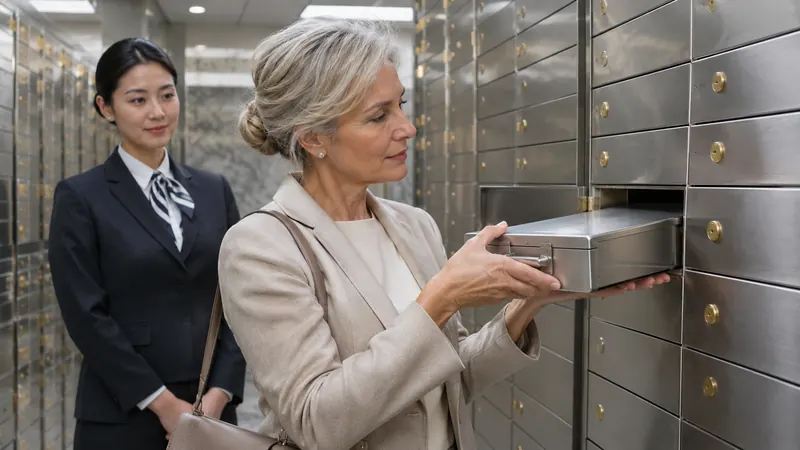
Documents for a bank account for non-residents
The basic file contains a valid identity card or passport, a recent proof of address outside Slovakia, a declaration on the origin of funds, the reason for opening and the tax number of the country of residence. An employment contract, a property deed or a commercial register extract strengthens the file.
Slovak anti-money-laundering law obliges the bank to identify the beneficial owner and keep documents for several years. Papers issued abroad are generally accepted in English, but some branches may ask for a Slovak translation.
Ukrainian refugees who benefit from temporary protection also open accounts in the country, with procedures adapted by several banks. This context has strengthened advisers’ experience in handling foreigners’ files where proofs of address are unusual or incomplete.
Applicants can reduce delays by sending scans of the documents to the adviser before the appointment, so that the branch can review the file in advance and only needs the originals on the day.
Remote opening and branch visits
Some banks allow a first request online with video verification, but most traditional institutions require a branch visit to sign the contract. A legalised or apostilled power of attorney sometimes allows a representative to complete this step, at the bank’s discretion.
Banks frequently mentioned
Slovenská sporiteľňa, a subsidiary of Austria’s Erste group, VÚB banka, a subsidiary of Intesa Sanpaolo, Tatra banka, part of the Raiffeisen group, and ČSOB Slovensko are the big names of the market. Poštová banka and Fio banka round out the offer, the latter being known for online services and low fees.
Each institution sets its own acceptance policy. Banks most open to European non-residents sometimes simplify formalities, while others require an address in Slovakia to issue a card and online banking access.
Competition among banks centres on fees and the quality of apps. Comparing the price lists of two or three institutions before choosing avoids account, card and transfer fees that add up over a year.
Online banks and basic accounts
Online or low-fee institutions attract clients who only need a current account and a card. They generally request fewer documents, but the range of services stays limited and English support varies. A basic account is often enough to receive rent or pay local charges.
Taxes on the account and information exchange
Interest on deposits may bear Slovak withholding tax, and the bank states the rate according to the holder’s situation. Double-taxation treaties concluded with many countries can reduce this burden, on presentation of a tax residence certificate.
Slovakia applies the European directive on administrative cooperation and the Common Reporting Standard. A foreigner’s balances are therefore passed to the tax authority of the home country. A French tax resident declares the account held abroad, and a US taxpayer completes a FATCA form supplied by the bank.
Local income, such as rent collected in Bratislava or in mountain resorts, is taxable in Slovakia. The non-resident holder files a return with the tax authority, and a local accountant can help calculate the tax and apply the treaty with their country.
Deposit guarantee
Deposits with a licensed Slovak bank are covered by the Deposit Protection Fund up to 100,000 euros per depositor and per institution, as in every European Union country. The guarantee also applies to non-residents. Holders who keep a large balance sometimes spread their funds across several banks to stay under the ceiling.
Fees, timing and reasons for refusal
Maintenance fees are moderate and often lower than in Western Europe. Euro transfers within the SEPA area are cheap, but transfers outside it carry higher commissions. Opening takes from a few days to two or three weeks, depending on the bank and how complete the file is.
Refusals stem from the lack of a link with the country, poorly justified funds, an incomplete file or a country of residence seen as risky. The bank need not give reasons, but the adviser often points out which documents are missing.
Cash withdrawals at the bank’s own machines are generally free, while those made at a competitor’s may be charged. Card payments in the country are very common, including contactless, and cash use is declining in the big cities.
Checks before opening a bank account for non-residents
Ask the bank whether it accepts a non-resident holder, which documents are expected, whether translation is required, what minimum deposit applies and whether physical presence is mandatory. State the purpose and the type of flows planned.
Have the monthly fees, online access from abroad, the phone number used for authentication, card limits, withholding on interest and closing terms confirmed. A written confirmation avoids surprises at signing.
Keep in mind that a bank may refresh its identity checks at intervals, asking again for an up-to-date passport copy and proof of address, and that unanswered requests can lead to restrictions on the account.
Banks and providers to open this account
- Slovenská sporiteľňa — The country’s largest retail bank, part of the Erste group, with accounts, cards and online banking.
- VÚB banka — Subsidiary of Intesa Sanpaolo, active with individuals and companies.
- Tatra banka — Raiffeisen group bank with current accounts, savings and digital services.
- ČSOB Slovensko — Subsidiary of Belgium’s KBC group offering accounts, cards and loans to individuals.
- Fio banka — Bank known for low-fee online services and basic current accounts.