
Somalia: Opening a Bank Account for Non-Residents

Somalia: a bank account for non-residents is an account held with a licensed bank in Mogadishu, Hargeisa or another major city by someone who lives outside the country, notably members of the Somali diaspora in Europe, North America or the Gulf. It is usually denominated in US dollars, the dominant currency, and less often in Somali shillings. It allows holders to receive funds and support a family or a business. The offer remains limited and varies widely from one bank to another.
A bank account for non-residents in a rebuilding banking sector
After the state collapsed in 1991, Somalia went for years without a proper banking system. Diaspora remittances moved through money-transfer companies, while local payments were made in cash. Since the mid-2010s, licensed commercial banks have reopened counters in Mogadishu, and opening an account as a non-resident has become possible again, though it is still less routine than in neighbouring countries.
A non-resident here means someone whose main home is abroad: a Somali in Minneapolis, London or Dubai, a Kenyan or Ethiopian entrepreneur selling goods in Mogadishu, or a visiting aid-agency employee. The account is mainly used to receive payments, settle suppliers and keep money safe from the risks of carrying cash.
The security and institutional context weighs on choices. Banks rely on local agents, secure vaults and verification procedures that can be heavy. A foreign holder does well to ask at the outset which branch will handle the file and who will answer in case of a problem.
Dollar, Somali shilling and the Central Bank of Somalia
The official currency is the Somali shilling (code SOS), but the US dollar dominates economic life: prices of imported goods, private-sector wages, rents and property deals. Accounts offered to non-residents are therefore mostly in dollars. The shilling circulates mainly as small notes, and the quality and availability of banknotes vary a great deal between regions.
The Central Bank of Somalia, re-established in Mogadishu from 2009, issues licences, supervises banks and prepares anti-money-laundering rules. It publishes notices on authorised institutions, which help confirm that a bank is allowed to operate. Somaliland, which declared independence without international recognition, runs its own central bank and its own shilling, creating a separate setting in Hargeisa.
Prices quoted in shillings often follow the dollar rate, so converting small amounts can feel inconsistent from one market to another. Anyone planning to hold funds for a long period usually keeps them in dollars and converts only what is needed for local spending, such as rent, school fees or wages.
Mobile payments: EVC Plus and eDahab
Somalia is among the countries where mobile money is most widespread. EVC Plus, from the operator Hormuud, and eDahab, from Somtel, pay for purchases even in small shops. These wallets are not bank accounts, but they complement them for daily payments, including money sent from abroad.
Commercial banks and money-transfer companies
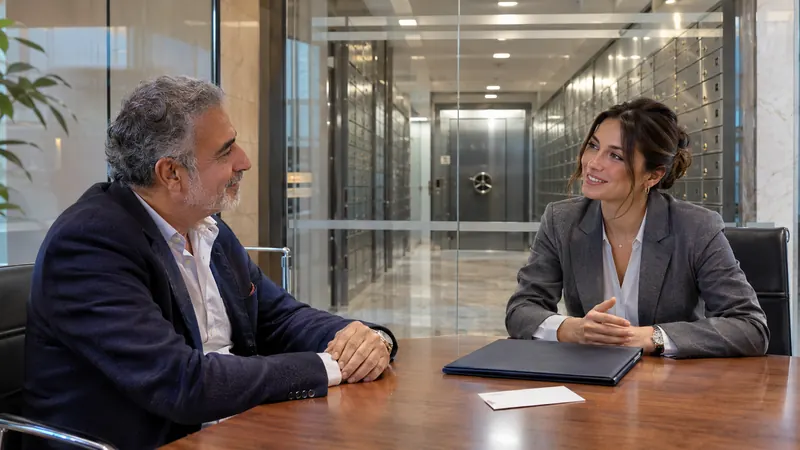
Among the best-known institutions are Dahabshil Bank International, which grew out of the Dahabshiil transfer group, Premier Bank, Salaam Somali Bank, IBS Bank and Amal Bank. Several practise Islamic banking, which means interest-free accounts and contracts such as murabaha or wakala. Branches are concentrated in Mogadishu, with outlets in Hargeisa, Bosaso, Garowe and Kismayo.
Transfer companies remain a central player. Many families combine a bank account for large sums with a remittance operator for routine payments. Some Western banks limit their ties with Somalia out of caution, which can lengthen processing times or force a route through a correspondent in the Gulf or East Africa.
Customers should also look at how each bank handles international payments. Some route them through a partner in Nairobi, Addis Ababa or Dubai, while others rely on a direct arrangement with a larger correspondent. The route affects fees, speed and the documents that may be requested along the way.
Documents usually requested at opening
A valid passport remains the main document. Institutions also ask for a photo, proof of address abroad, a phone number and, for a Somali citizen, sometimes a local identity paper or the name of a guarantor known to the bank. Checks on the source of funds play a central role, because banks must satisfy the requirements of their foreign correspondents.
For a business account the file grows: a trading licence issued by local or regional authorities, articles of association, the identity of partners, bank statements from another institution and a description of expected flows. Documents written in Arabic or Somali sometimes have to be translated. An opening deposit, often expressed in dollars, may be needed to activate the account.
References can make a practical difference. A letter from a reputable bank abroad, a recommendation from a known Somali business or a short statement from an employer helps a compliance officer feel comfortable with a new foreign customer, particularly when the amounts involved are significant.
Opening a bank account for non-residents from abroad
Remote opening exists but remains modest. A few banks offer an online form or contact through messaging apps for diaspora members, then require identity verification by video or through an authorised representative in Mogadishu. Signing in person is still the most dependable route when the security situation allows travel.
Before any trip it makes sense to check flight connections and local security conditions, which change quickly. Somalia keeps East Africa Time, three hours ahead of GMT with no daylight saving. The working languages are Somali and Arabic, and several banks also serve customers in English.
Dollar accounts and cash withdrawals
Cash dollars are withdrawn at counters or at a handful of ATMs in Mogadishu. Daily ceilings are set by each bank, and large amounts require advance notice. Card and app payments are growing in the capital, but shops in provincial towns mostly accept cash or mobile money.
Compliance, sanctions and information exchange
Somalia has had an anti-money-laundering and counter-terrorist-financing law since 2016, applied under the supervision of the Central Bank and a financial intelligence unit. Banks therefore collect the identity of beneficiaries, the purpose of payments and, at times, details on politically exposed persons. International sanctions regimes target certain armed groups, and institutions screen transactions accordingly.
Automatic exchange of tax information does not have the reach it has in countries further along in that area. US citizens must still report foreign accounts to their home tax authority. A tax adviser can clarify obligations in the holder’s country of residence, whether that is the United Kingdom, the United States, Sweden or the Netherlands.
Why transfers sometimes take longer
American and European banks apply enhanced checks to transactions tied to Somalia. A transfer may be held to obtain a document or to verify a third party’s identity. Giving a precise reason and attaching an invoice or contract generally shortens these delays.
Questions to put to the bank before choosing
The first point to confirm is the bank’s status: is it on the Central Bank’s list of licensed institutions? Then ask about monthly fees, charges on incoming and outgoing transfers, the minimum balance and daily withdrawal limits, often set in dollars. Rules on dormant accounts are also worth knowing.
Other topics to clarify include the correspondent banks used, typical transfer times from Europe or North America, the availability of a mobile app and a customer service reachable from abroad. Getting those answers in writing prevents disputes at a later stage. Exact rules always rest with the selected bank and with conditions in the country at the time of the application.
It is also worth asking how the bank handles disputes, who to contact if a transfer goes missing, and whether statements can be sent by email in English or Arabic for use abroad.
Banks and providers to open this account
- Dahabshil Bank International — Bank that grew out of the Dahabshiil group, operating in Mogadishu and other cities with dollar-based services.
- Premier Bank — Somali commercial bank offering current accounts and digital services.
- Salaam Somali Bank — Islamic bank founded in Mogadishu serving individuals and businesses.
- IBS Bank — Somali Islamic bank developing mobile banking and card payments.
- Amal Bank — Somali institution offering accounts that follow Islamic finance principles.