
Trinidad and Tobago: opening a bank account for non-residents
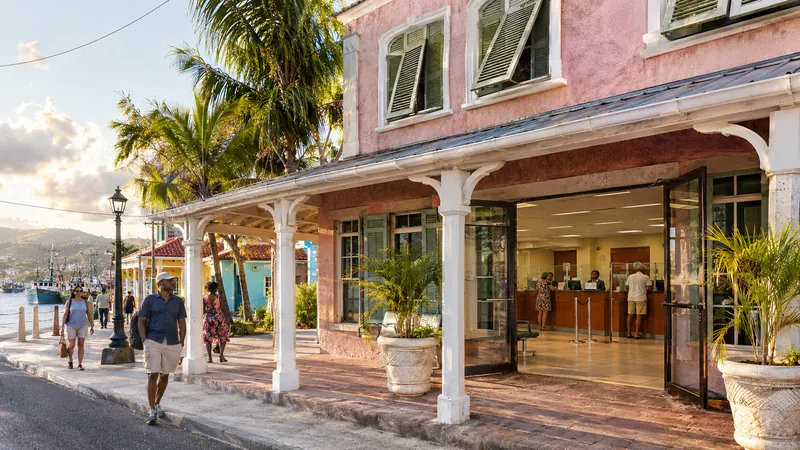
Trinidad and Tobago: a bank account for non-residents is a deposit account opened at a bank in the twin-island republic by someone who does not live there, in Trinidad and Tobago dollars (TTD) or, depending on the bank, in US dollars. Banks ask for a passport, proof of address abroad, bank references and evidence of the origin of funds. The Central Bank of Trinidad and Tobago supervises the institutions, and a recurring shortage of foreign currency shapes how accounts are used. Conditions vary from one bank to another.
An oil and gas economy with managed exchange
Trinidad and Tobago is the southernmost republic of the Caribbean, about ten kilometres from the Venezuelan coast. Port of Spain, the capital, lies on Trinidad, where finance and industry are concentrated. Tobago, smaller and geared to tourism, has its own assembly. The economy relies on natural gas, oil and petrochemicals.
The currency is the Trinidad and Tobago dollar, issued by the Central Bank of Trinidad and Tobago. The rate is managed under a controlled float. For several years banks have reported a shortage of US dollars: the official market is supplied by central bank sales, while demand for foreign currency exceeds supply.
The country keeps UTC-4 all year. The gap with London is four hours in winter and five in summer. English is the language of banking.
Because Trinidad sits close to Venezuela, correspondent banks look carefully at payments linked to the region, and local banks apply careful screening to unusual transfers.
Who can open a bank account for non-residents in Trinidad and Tobago
Banks accept foreigners in several cases: expatriate energy executives, property owners, retirees, students and members of the diaspora. Pure non-residents with no tie to the country are received more cautiously, since compliance focuses on foreign currency flows.
Many institutions prefer the applicant to have a precise project and a local address, even a temporary one. Holders of a work or residence permit gain access to a wider range of products, including credit cards and loans.
Banks may offer TTD-only accounts, even to a foreigner, and reserve US dollar accounts for clients who show income in foreign currency. This policy responds to the strain on the exchange market.
An established relationship with a bank in the same group in another country, for example a Canadian parent, can ease the introduction, since some institutions accept clients recommended by their parent company more readily.

Documents to provide
A valid passport is required, together with recent proof of address in the country of residence and a second identity document. Banks add the tax number of the country of residence, a reference letter from a foreign bank and sometimes two professional or personal references.
The source of funds is justified by payslips, tax notices, a sale contract or bank statements. For a large amount the bank may ask for a letter from an accountant or lawyer. Documents in a language other than English are translated.
Foreign companies provide their articles of association, a certificate of incorporation, the list of beneficial owners and directors’ identification. An apostille is sometimes needed.
Banks may also ask for a signed declaration on the purpose of the account and on the expected volume of monthly transactions. Providing realistic figures and consistent documents speeds up the review.
Students and expatriate employees
A student adds an admission letter and proof of funding. An expatriate employee supplies an employment contract and permit, often with an employer letter addressed to the bank. These profiles open an account more easily than an investor with no tie to the country.
Banks operating in the country
Republic Bank, of Trinidadian origin, is one of the largest banking groups in the Caribbean and has a branch network across the country. First Citizens Bank is the other major local institution. Scotiabank Trinidad and Tobago, a subsidiary of the Canadian group, and RBC Royal Bank, part of the Royal Bank of Canada, are the main foreign banks.
Other institutions work in narrower segments: JMMB Bank, of Jamaican origin,. All offer online services in English. Access from abroad depends on authentication, which may require a local number.
Online banking at the larger banks offers statements, transfers and bill payments, though access for a non-resident may be limited at first until the bank has completed its checks.
Opening a bank account for non-residents remotely or in person
Fully remote opening is rare for a client with no local tie. Banks generally ask for originals and a branch visit for the signature, followed by a compliance check. A preliminary email shows whether the file is admissible.
A stay in Port of Spain with an appointment can often wrap up the opening in a few days if the documents are complete. A bank may nevertheless ask for extra papers and extend the delay. The card and online banking credentials arrive after validation.
Delays reach several weeks when documents must be certified or apostilled abroad.
Currency shortage and what it means for the client
A TTD account can receive transfers, but converting to US dollars and sending funds abroad is sometimes delayed. A non-resident planning to repatriate money should ask the bank how it handles such requests, what delays it observes and whether supporting documents are required.
Tax, exchange and information sharing
The country applies anti-money-laundering rules under the watch of its financial intelligence unit and takes part in automatic exchange of information. Banks collect the holder’s tax residence to meet these obligations.
The holder remains subject to the rules of the country of residence, which may require declaration of foreign accounts. Interest earned by a non-resident may be subject to withholding tax under local law and treaties. A tax adviser can check the position.
Large transfers may prompt requests for explanations. Banks generally ask for the contract or invoice that justifies the payment.
Retirees and property owners on Tobago
Tobago attracts retirees and owners of second homes. These clients open an account more easily by presenting the title deed, a local bill and a regular pension income. Branches in Scarborough offer fewer specialised services than those in Port of Spain, which can lengthen the process.
Fees and everyday use
Banks charge maintenance fees, commissions on international transfers and sometimes on cheques. Foreign currency operations can cost more, with a margin on the exchange rate. Ask for the full tariff sheet.
Debit cards are widely accepted in shops and at cash machines on the island. Cards linked to a TTD account may have their use abroad limited by the bank. Cheques are still common for rent and certain services.
Dormant accounts can be closed. A small regular transfer in TTD is enough to avoid that risk.
Foreign cheques deposited locally can take several weeks to clear, and some banks hold the funds in the meantime, so transfers are the more practical option for larger sums.
Checks to make before opening an account
The bank should state in writing whether it opens an account for a non-resident in the applicant’s situation, which documents it expects, what minimum deposit applies and whether the account can be held in US dollars.
The holder asks about maintenance fees, transfer commissions, conversion rules, withdrawal limits, online banking from abroad and how dormant accounts are treated.
Finally, check what your country of residence requires you to report about a Trinidad account, and keep the opening paperwork. Local exchange rules can change, so it is worth checking current conditions before any large transfer.
Banks and providers to open this account
- Republic Bank — Large bank of Trinidadian origin with a branch network across the country.
- First Citizens Bank — Local bank offering accounts, savings and loans for individuals and businesses.
- Scotiabank Trinidad and Tobago — Subsidiary of Canada’s Scotiabank, active in retail and corporate banking.
- RBC Royal Bank (Trinidad and Tobago) — Subsidiary of the Royal Bank of Canada serving individuals and businesses.