
Mali: open a bank account for non-residents

Mali: opening a bank account for non-residents means holding funds with a bank licensed in the West African monetary union, in Bamako or another city, while living abroad. Many holders are Malians settled in France or Côte d’Ivoire, gold and cotton traders, or contractors paid locally. Accounts are normally kept in CFA francs, and some banks add euro or dollar accounts. Each bank sets its own paperwork and risk checks on top of the shared regional rules. Eligibility depends on residence, purpose and the quality of the paperwork supplied.
A regional currency and a regional central bank
Mali shares the West African CFA franc with seven other members of the monetary union. The currency is pegged to the euro at 655.957 francs per euro, and the Central Bank of West African States issues it from Dakar. For a non-resident earning in euros, that fixed parity removes exchange-rate surprises between the account and the eurozone, although the conversion fee still has to be negotiated with each bank.
The regional framework also explains why a bank licence granted in one member country carries weight across the union. Transfers between member states travel as domestic payments in many cases, which is helpful for a family that spreads its money between Bamako, Abidjan and Dakar. Payments outside the union follow the foreign exchange regulations of the monetary zone.
The union’s central bank also sets the framework for banking supervision, including capital adequacy and reporting rules, and publishes a directory of authorised institutions. Checking that a bank appears on that list is a simple first step for a non-resident who has never dealt with it.
Why people open accounts without living in Mali
Remittances form one of the largest flows into the country. Malians in France, Spain, the United States and the Gulf send money to relatives, pay for family events or build houses in Bamako, Kayes or Sikasso. Another group includes traders in gold, cotton, livestock and shea, and companies serving mines in the Kayes and Sikasso regions that must pay local suppliers and staff.
A bank considers where the person usually lives and where their economic interests lie. A French resident of Malian origin who visits twice a year is a non-resident, and the same holds for a foreign geologist on a short contract. Residents of other union countries sometimes find the process easier, because the regional rules recognise their status within the zone.
Foreign nationals who relocate for a short assignment sometimes keep a Malian account after leaving, to receive end-of-contract payments. Banks usually allow this if the account stays active and the customer confirms the new residence in writing, but they may reclassify the holder as a non-resident and adjust the limits accordingly.
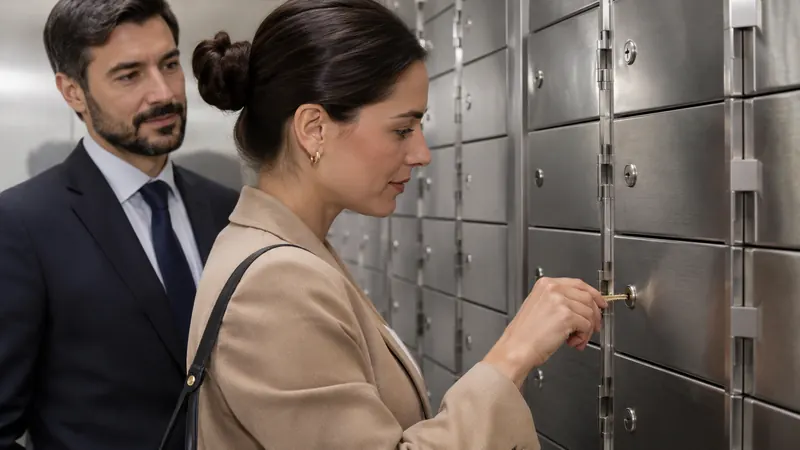
Documents needed to open a bank account for non-residents
Applicants are asked for a valid passport or national identity card, proof of an address abroad, photographs, and a signed application. Banks also look for a source-of-funds explanation: a pay slip, a company invoice, a sale deed or a letter from an employer. French is the working language, so English documents may need a sworn translation.
Companies supply their incorporation papers, a trade register extract from the home country, details of directors and ultimate owners, and a resolution authorising the opening. Branches differ on whether an in-person visit is compulsory. Where it is not, a lawyer or relative holding a notarised power of attorney can lodge the file, though the bank may still insist on video verification.
Apostille and translation
Documents issued outside the union are easier to accept when apostilled or legalised, and non-French papers may be translated by a sworn translator. Starting these steps before travelling avoids a second journey, because the branch usually keeps photocopies and returns the originals after review.
Power of attorney for relatives
Many holders let a trusted relative handle everyday matters in Bamako. The mandate must be notarised, preferably legalised by the Malian consulate, and the bank will want to see the agent’s identity and specimen signature. The scope of the mandate should be limited to what is truly needed, such as cash withdrawals or collecting statements.
Local and foreign currency in practice
The CFA franc account is the default for rent, school fees, wages and bills. Banks may offer euro or dollar accounts for customers who earn abroad, subject to origin-of-funds checks and the exchange rules of the union. Outward transfers beyond a certain size generally require a supporting document, such as an invoice, a loan agreement or a property sale contract.
Mobile money from Orange and Moov is common in Mali and links easily to a bank account for small payments, but it relies on a local SIM and identity registration. Cash remains the norm in markets outside the capital, so many holders combine a bank account with a mobile wallet and pre-arranged withdrawals.
When sending funds out, expect to explain the purpose and supply documents. For salary and family support, a payslip or birth certificate can be enough; for property or business payments, the bank will ask for contracts. Responding quickly to its questions generally shortens the processing time.
Gold and trade proceeds
Because Mali is a major gold producer, banks pay close attention to flows linked to precious metals and cross-border trade. Documents proving licences, invoices and customs paperwork are often requested, and delays are common when the paper trail is incomplete.
Banks active in Bamako and beyond
The market includes Banque de Développement du Mali, Bank of Africa Mali, Ecobank Mali, Orabank Mali, Coris Bank International, Banque Malienne de Solidarité and Banque Internationale pour le Mali. Some have regional parents with branches across several West African countries, which helps customers who need accounts in more than one capital.
Practical comparison covers the fees for incoming international wires, the reliability of internet banking, the number of cash machines and the speed of correspondent payments in euros. A bank with an established diaspora desk can often guide a non-resident through the file faster than a branch that mostly serves local clients.
The branch footprint outside Bamako is thinner, and mobile banking quality varies. Customers who visit rarely should ask about statements by email, text alerts and the process for replacing a lost card while abroad, since these services often decide whether a remote relationship works smoothly.
Sanctions history, grey list and tax reporting
Mali was placed on the Financial Action Task Force grey list in 2021 and left it in October 2024. The country also faced regional sanctions in 2022 and 2023 and withdrew from the Economic Community of West African States in 2025, while remaining in the monetary union. These events reinforced the caution of banks and their correspondents when examining payments.
Account holders remain accountable to the tax authority of the country where they live. Declaring foreign accounts is mandatory in many jurisdictions, and automatic exchange of information may apply. Banks collect tax residency declarations, and a United States taxpayer is asked for an additional form. A qualified adviser should answer questions on interest income, inheritance and property.
Politically exposed persons and certain business sectors receive extra scrutiny from both local banks and international correspondents. Being open about ownership, activity and expected account volumes at the start usually makes later transactions smoother and reduces the risk of a freeze while checks are carried out.
Checks before you open a bank account for non-residents
Request a written fee schedule: monthly charges, incoming and outgoing transfer costs, minimum balance, dormancy rules and closure terms. Ask whether the file can be filed remotely and how long approval takes.
Then check the card conditions, the currencies available, the daily limits, the process for appointing an agent and the way statements are delivered abroad. Keep a copy of the signed contract, the account number, the IBAN-style identifier used by the bank and the SWIFT code to receive funds without delay.
Banks and providers to open this account
- Banque de Développement du Mali (BDM-SA) — Commercial bank headquartered in Bamako with a wide branch network for individuals and companies.
- Bank of Africa Mali — Malian subsidiary of the Bank of Africa group, offering accounts and international transfer services.
- Ecobank Mali — Local arm of the pan-African Ecobank group, serving businesses and individuals in Bamako.
- Orabank Mali — Subsidiary of the Oragroup network, which opens current accounts for retail and corporate customers.
- Coris Bank International Mali — Bank with roots in Burkina Faso and a growing branch network in Mali.