
Palau: open a bank account for non-residents
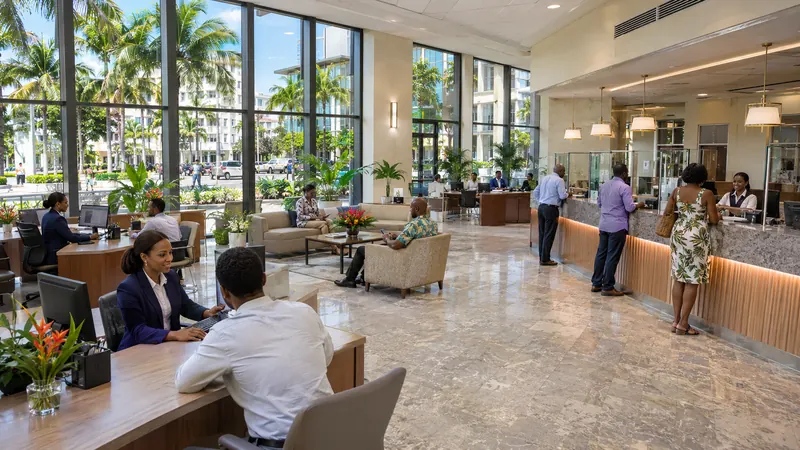
Palau: a bank account for non-residents can be requested from the handful of banks operating in Koror, the commercial centre of an island nation that uses the United States dollar. Most deposits sit with American branches regulated under federal rules, while the Financial Institutions Commission supervises the sector locally. Typical files include a passport, proof of address, a tax identification number and the reason for holding funds in the islands. Online account opening exists for some products, though foreign applicants should expect questions and sometimes a branch visit.
A dollar economy in the western Pacific
Palau is an archipelago of about two hundred islands east of the Philippines, home to roughly eighteen thousand people. Koror is the commercial hub, while the capital, Ngerulmud, sits on Babeldaob. Tourism, diving and fishing drive the economy, and the Compact of Free Association with the United States, in force since 1994, shapes many public and financial arrangements.
The currency is the United States dollar, so Palau has no exchange-rate risk for dollar earners. It also has no central bank and no domestic payment system, which means banks lean on American infrastructure for clearing and settlement. An applicant from abroad therefore deals with a banking environment that is small but familiar in structure.
Tourism recovered strongly after the pandemic, and the government has encouraged visitors to sign the Palau Pledge on arrival. This focus on conservation and visitors influences how financial services develop, with payments for hotels, dive operators and tour companies making up a large share of card activity in Koror.
Banks operating in Koror
Three branches of American banks hold nearly all deposits: Bank of Hawaii, Bank of Guam and BankPacific. The IMF notes that these FDIC-insured branches account for about ninety-eight percent of total deposits. Two small local banks complete the picture, while the National Development Bank of Palau lends to businesses rather than collecting deposits.
Each bank sets its own acceptance policy for overseas customers. Rather than approaching all three at once, a sensible plan is to write to the branch whose services match the purpose of the account, for example card payments, business transactions or savings.
Bank of Hawaii and Bank of Guam
Bank of Hawaii offers digital services and has promoted online account opening for Guam, Saipan and Palau. Bank of Guam links Palau to the regional American network. Both work under federal anti-money-laundering rules, so an application typically includes a W-8 form for foreign persons, identification and a statement of the account’s purpose.
BankPacific and the National Development Bank
BankPacific is a smaller institution with a local presence in Koror and a customer base of residents and businesses. The National Development Bank of Palau focuses on loans for housing, small firms and agriculture. It does not serve as an ordinary deposit option, but it matters for investors planning a project.
Why a branch visit still matters
Although some banks promote online applications, identity verification for non-residents often ends in a branch. Staff compare original documents, take signature samples and explain the account terms. A trip to Koror can be combined with a business visit, a holiday or a dive trip, and doing so is often the quickest way to finish the process.
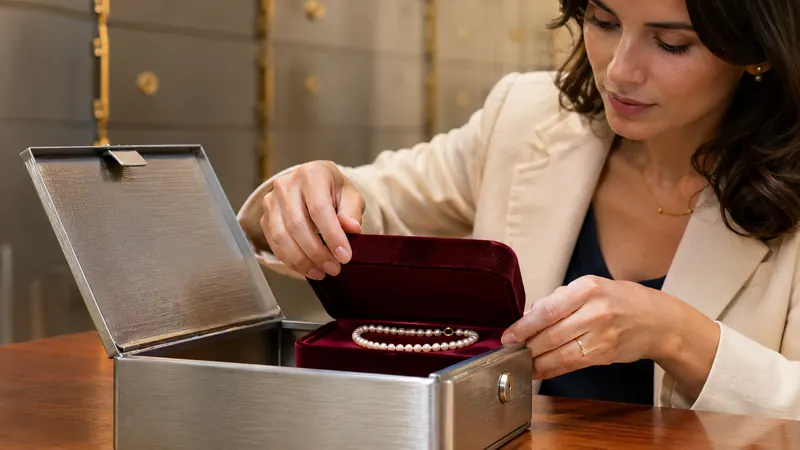
Papers for a bank account for non-residents
A valid passport is the starting document, usually with a second identity document. Banks ask for a residential address in the home country, a recent utility bill or statement and a taxpayer identification number. Citizens of the United States and of the Compact states face fewer visa questions than other nationalities, while others may be asked for an entry permit or work authorisation.
The bank needs a clear purpose. Employees of an offshore project, investors in tourism, property owners and relatives of residents bring contracts, invoices, a lease or an employer letter. Companies file incorporation papers, a register of directors and shareholders and a board resolution to open the account.
Copies often require certification. Some banks accept electronic scans for the first review and request originals later, so asking how to submit documents from abroad can prevent several weeks of back-and-forth.
Banks may ask for bank statements covering several months, a reference from the applicant’s current bank and an explanation of how the funds were earned. Politically exposed persons and directors of state-owned firms face deeper checks, so they should prepare a detailed account of the source of wealth.
Sending and receiving dollars
Almost every incoming or outgoing wire is processed through a United States correspondent bank. The Palauan branch deposits funds with its head office, which makes payments quick when the bank agrees to the transaction. Compliance staff may still request the invoice or contract behind a large wire.
Wire fees apply and vary by branch. Some banks charge for incoming international wires as well as outgoing ones. Cheques are accepted but may be held. Cross-border payments remain small compared with the country’s economy, so unusually large transfers attract more attention and can be delayed.
Because the dollar is the legal tender, savers who earn dollars face no conversion. People paid in euros or other currencies still convert at their sender’s bank, so it helps to compare exchange margins and wire fees. A specialist transfer firm can lower cost, as long as the receiving bank accepts the payment.
Day-to-day banking in Palau
Branches in Koror offer ATMs, debit cards and basic online access, and merchants in the tourism sector accept cards. Outside Koror and on the outer islands, cash is the norm, and branch services are scarce. Opening hours are short and queues can be long on pay days.
Palau follows UTC+9, which is eight hours ahead of Central Europe in winter. Account holders abroad should check that support by email or phone is available in English, whether the bank can verify signatures electronically and what the daily withdrawal limit for the debit card is.
Fees for non-residents can be higher than for local customers, and minimum balance rules sometimes apply. Comparing at least two branches before committing gives a better idea of the real cost.
Mobile payments and remittance apps are spreading, and visitors frequently use cards for hotel and tour bills. Even so, many small businesses prefer cash, and some island trips involve no card terminals at all. Withdrawing enough cash in Koror before a trip avoids problems in remote areas.
Compliance, tax reporting and reputation
Palau’s banks follow the Money Laundering and Proceeds of Crime framework and report suspicious activity to the financial intelligence unit. Foreign customers should expect enhanced checks on the source of funds, in particular where companies, trusts or several jurisdictions are involved. Because federal rules also apply to the American branches, documentation is typically thorough.
An account in Palau does not shield income from tax in the country of residence. Residents of most states must declare foreign accounts, and American citizens file annual reports on foreign bank accounts. For personal tax advice, a qualified adviser in the home country is the correct point of contact.
Questions to ask before opening a bank account for non-residents
Start with eligibility: does the branch accept customers who do not live in Palau, and which products are open to them? Ask whether the application can be completed online or by courier, and whether a visit to Koror is compulsory. Confirm the minimum balance, monthly fee, wire charges and debit card conditions in writing.
Also ask which correspondent bank is used, what limits apply to daily transfers, how long cheques are held and what happens to dormant accounts. If the account will serve a business, check that the activity is allowed and what documents are needed for each signatory. Contacting two or three banks gives a realistic view of timing and cost.
Banks and providers to open this account
- Bank of Hawaii Palau — American bank with a branch in Koror, offering personal and business accounts and digital services in the region.
- Bank of Guam Palau — Regional bank operating a Palau branch with deposit accounts, loans and links to the American banking system.
- BankPacific — Smaller bank with a Koror branch serving residents and local businesses with deposit and lending products.
- National Development Bank of Palau — Government-owned lender that finances housing, agriculture and small businesses; it does not serve as a deposit bank.