
Samoa: open a bank account for non-residents
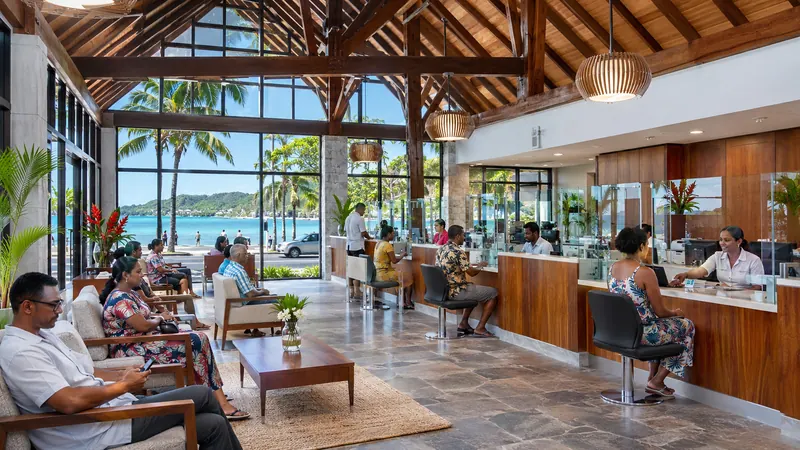
Samoa: a bank account for non-residents can be requested from the four licensed commercial banks operating in Apia, the capital on Upolu. The Central Bank of Samoa licenses them and publishes an exchange control booklet that governs transfers in and out of the tala. Applicants normally supply a passport, proof of address, tax details and an explanation of the source of funds. Opening from abroad is possible only in limited cases, so a branch visit or a local contact is common, and acceptance remains at each bank’s discretion.
A small financial centre in the South Pacific
Samoa is an independent state of about two hundred thousand people, spread over the main islands of Upolu and Savai’i. Apia, on the north coast of Upolu, is the economic capital and the seat of the banks. Tourism, remittances from relatives in New Zealand, Australia and the United States, agriculture and fishing sustain the economy.
The currency is the tala, issued under the supervision of the Central Bank of Samoa, which also licenses commercial banks, manages foreign reserves and publishes the exchange control rules. The country once marketed an international finance centre, and the Samoa International Finance Authority still regulates offshore entities, but ordinary retail banking operates through the four commercial banks.
In December 2011 Samoa moved to the west side of the international date line, skipping 30 December that year, to align its working week with Australia and New Zealand. That shift made trade easier, and it explains why banking hours and payment cut-off times fit Oceania more closely than the Americas.
Banks that welcome foreign customers
The Central Bank’s register lists four commercial banks: ANZ Bank Samoa, National Bank of Samoa, Samoa Commercial Bank and Bank of South Pacific. Each runs branches in Apia, and some have outlets on Savai’i. Their rules for customers who live abroad differ, so enquiries to more than one institution are useful.
Samoa’s banks are small by international standards, so each application is reviewed by people who often know local employers, families and land owners. This can help applicants with a clear local link, but it also means a vague request with no visible connection to the country is unlikely to succeed.
ANZ and Bank of South Pacific
ANZ Samoa publishes savings and transaction product terms, fees and foreign currency account information. Bank of South Pacific is part of a Pacific group with a large footprint in Papua New Guinea. Both are used to international customers, workers on projects and expatriates, and both apply group-wide compliance procedures.
National Bank of Samoa and Samoa Commercial Bank
These two institutions have strong local ties and extensive retail activity among Samoan households and small businesses. Their customer base is mostly residents, but staff handle remittance receipts and payments for families abroad. Asking each bank about non-resident accounts directly is the best way to learn its current approach.
Why more than one enquiry helps
Policies on foreign customers change with staff, group rules and the correspondent banks that support the institution. A refusal from one bank is not a reason to give up, since another may take the same profile. Keeping a written record of questions and answers makes comparison easier and avoids repeating the same explanation.

Documents for a bank account for non-residents
A valid passport comes first, usually with a second identity document. Banks ask for an address in the country of residence supported by a recent bill or statement, and they record occupation, contact details and a signature specimen. A taxpayer identification number from the country of tax residence is a normal requirement.
The bank wants to know why the account is useful. Samoans living abroad, owners of customary or leased land, employees of projects funded by donors and people with business plans submit contracts, letters or invoices that explain the link to Samoa. Entrepreneurs add registration papers, a register of directors and a resolution to open the account.
Certified copies are frequent, and original documents can be requested. Because courier delivery takes time, applicants should prepare the full set first and ask whether the bank accepts scans for the first review.
Samoan families often send documents by courier through relatives, but banks usually want originals checked by staff. A solicitor or a justice of the peace in Apia can certify copies, and a Samoan relative or employer can vouch for an applicant’s identity and the purpose of the account.
Tala, exchange controls and international transfers
The Central Bank’s Exchange Control Information Booklet describes how residents and non-residents may move money. Many routine payments pass through authorised dealers without special approval, but larger or unusual transactions can require documents or notification. Foreign currency accounts exist for approved clients and follow specific conditions.
Remittances form a large share of national income, so banks process many incoming transfers from New Zealand, Australia and the United States. Correct beneficiary details, a SWIFT code and a clear reference reduce delays. Intermediary banks can deduct fees, and the tala’s exchange rate against the New Zealand and Australian dollars affects the amount received.
The tala is linked to a basket of currencies, with the New Zealand dollar and the Australian dollar playing an important role. People who earn in euros or sterling should compare the exchange rate used by their sending bank with market rates, because margins can be wide on small and mid-sized payments.
Daily banking in Apia and beyond
Apia offers branches, ATMs, card terminals and internet banking, while services on Savai’i and the smaller islands are lighter. Many families still use cash, and mobile payment solutions are expanding. Opening hours are modest, and queues are common around pay days.
Samoa observes UTC+13, so it is among the first countries to begin each day. Calling from Europe usually means early evening on one side and early morning on the other. A customer abroad should check email support, statement delivery and card replacement procedures.
English and Samoan are both official languages, and forms are written in English. Fees for non-residents may be higher than for locals, especially for international wires.
Mobile connectivity has improved, and many households use phones for remittance alerts and bill payments. Even so, rural customers and elderly relatives often prefer the branch, and some transactions still need paper forms. A holder abroad should ask whether a local contact can be authorised to act with limited powers.
Compliance, reputation and tax reporting
Samoa has revised its anti-money-laundering framework and its offshore regime after international reviews, and banks now apply thorough know-your-customer checks. Foreign customers should expect questions on the origin of funds and the expected volume and destination of payments.
A Samoan account does not remove duties at home. Residents of many countries must declare foreign accounts, and tax authorities share data under international agreements. For personal questions, a tax adviser in the country of residence is the right contact, rather than the bank.
Questions to ask before opening a bank account for non-residents
Ask whether the bank opens accounts for customers who live abroad, which currency the account will use and whether a visit to Apia is required. Request the exact list of documents with certification rules, and confirm the minimum balance, monthly fee, wire charges and card limits in writing.
Find out which correspondent bank handles foreign payments, how long foreign cheques are held and what happens to dormant accounts. If a company will use the account, check that its activity is allowed. Speaking to at least two banks provides a realistic comparison of timing, service and cost.
Banks and providers to open this account
- ANZ Samoa — Australian bank with branches in Apia, offering savings, transaction and foreign currency accounts.
- Bank of South Pacific Samoa — Pacific banking group with Samoan operations, serving individuals and businesses.
- National Bank of Samoa — Locally rooted commercial bank offering deposit accounts, loans and remittance services.
- Samoa Commercial Bank — Commercial bank serving Samoan households and small businesses with deposit and lending products.