
Palestine: opening a bank account for non-residents

Palestine: a bank account for non-residents is a shekel, dinar or dollar account held in a bank operating in the West Bank and Gaza by a person who does not live there permanently, such as overseas Palestinians, foreign workers and aid staff. The Palestine Monetary Authority supervises the sector. Because the territories use foreign currencies and depend on correspondent links through Israel and Jordan, applicants face detailed identity checks, careful screening of the source of funds and practical limits on cash and transfers.
A banking system without its own currency
The Palestine Monetary Authority, headquartered in Ramallah, supervises the banks. It does not issue a national currency. The Israeli shekel is the main means of payment for daily life, while the Jordanian dinar is widely used for savings and property, and the US dollar for larger transactions and trade.
Around a dozen banks operate in the West Bank, including local lenders such as Bank of Palestine, Palestine Islamic Bank, Quds Bank and Safa Bank, and branches or affiliates of regional groups such as Arab Bank, Cairo Amman Bank, Bank of Jordan and the Housing Bank for Trade and Finance.
Because Palestinian banks settle shekel cash and payments through Israeli banks, their operations depend on correspondent relationships that can change with political decisions. This feature separates Palestine from most other markets.
Why shekel cash is a recurring problem
Palestinian banks receive large amounts of shekel notes from wages and trade, yet Israeli banks cap the amounts they accept in return. The result is a surplus that must be stored or shipped, at a cost. Customers may therefore see restrictions on shekel cash deposits and be offered alternatives such as transfers or deposits in other currencies. Anyone planning to deposit significant cash should ask the branch in advance about local policy.
Who can hold a bank account for non-residents in Palestine
The most common non-resident customers are Palestinians living abroad, who keep accounts to support relatives, pay for land or build a house. Foreign nationals with local work, such as staff of international organisations, researchers and teachers, also open accounts.
Entry to the territories is controlled by Israel for most foreign visitors, and a visa or permit tied to a stay in the West Bank may be requested by the bank. Gaza has been subject to additional restrictions, and the war that began in October 2023 has disrupted branches and access to cash there.
Banks decide at their discretion and may decline applicants who cannot show a clear economic link or a source of funds that matches their profile.
Palestinians abroad and diaspora customers
Members of the diaspora often use accounts in dollars or dinars and provide a passport, a copy of a Palestinian identity card where available, and proof of address abroad. Some banks allow an initial application through a relative or a lawyer with a power of attorney, though identity verification in person is the standard route.
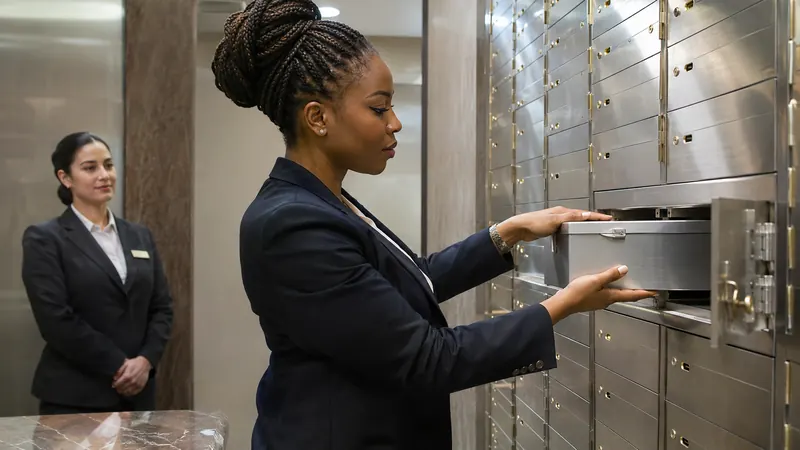
Documents and identity checks for a bank account for non-residents
Applicants usually present a valid passport, proof of address and a form describing occupation, expected activity and source of funds. A residence permit, employment contract or letter from an organisation helps establish the reason for opening the account.
Banks follow know-your-customer and anti-money-laundering rules issued by the Monetary Authority and by the financial intelligence unit. Customers may be asked for supporting invoices or contracts for larger incoming transfers.
Documents in languages other than Arabic or English may need certified translation, and powers of attorney signed abroad are typically legalised or apostilled.
Customers who live in several countries may be asked to prove their tax residence and to sign declarations on beneficial ownership if the account will receive funds on behalf of others. Providing complete, consistent documents at the first visit generally reduces waiting times.
Currencies, transfers and the role of correspondent banks
Accounts can be held in shekels, dinars and dollars, and some banks also offer euros. Incoming international transfers pass through correspondent banks in Jordan, Israel or Europe, and delays of several days are not unusual.
Cash is a recurring constraint. Surplus shekel notes accumulate in Palestinian banks because Israeli institutions limit their intake, which affects deposits in shekels. Banks therefore sometimes restrict cash deposits or prefer accounts in other currencies.
Sending money from the territories to the outside world requires documents that justify the purpose, and the process becomes slower when a payment triggers extra screening.
Remittances and Jordanian links
Many transfers from the diaspora pass through Jordan, where Palestinian banks maintain relationships with Amman-based institutions. Transfers made in dinars or dollars via Amman are common for families and for paying universities or property developers. Fees and timing vary, so compare the cost of a bank wire with that of a licensed money transfer operator.
Risk, compliance and political context
Palestinian banks operate in a context of legal and political uncertainty. International banks may apply enhanced due diligence to payments with the territories, and some customers experience account reviews or delayed transfers.
Sanctions lists and counter-terrorism regulations in other jurisdictions affect what is permissible for transfers to certain organisations. Individuals sending funds should check the rules of their own country, including those that cover charities and aid.
The security situation can also lead to temporary closures, curfews or limited access to branches. Applicants should confirm that the chosen branch is operating before travelling.
Digital banking and daily payments
Most local banks offer mobile apps and internet banking, with cards that work for local payments. Mobile wallets such as Jawwal Pay have grown, especially since the pandemic, and are used for transfers and bills.
Foreign cards are accepted in hotels and larger shops in cities such as Ramallah and Bethlehem, but cash in shekels is still necessary in small towns. ATMs exist in most cities, with limits that vary by bank.
Account opening entirely online is limited. Even where digital onboarding exists for residents, non-residents are generally asked to visit a branch or complete a verification through a representative.
Fraud awareness is also important: scams that promise easy access to Palestinian accounts or ask for advance fees have been reported. Only deal with the bank directly or through an official branch.
Taxes and reporting obligations
Interest on deposits may be subject to withholding rules set by the Palestinian tax authority, and income earned locally is taxable under local law. The details depend on residence status and the type of income.
Account holders who are tax residents elsewhere, including the United States, the United Kingdom or EU states, must follow their home country’s rules on foreign accounts. Several banks ask for FATCA and CRS self-certifications at account opening.
This overview is general information and not tax advice. A local accountant or tax adviser can assess a specific situation.
Foreign aid workers are often covered by host agreements or by employer payroll arrangements that treat taxes differently, so they should confirm their position with their organisation’s finance team.
Checks and questions before opening an account
Ask the bank which currencies the account supports, what fees apply to incoming and outgoing transfers, and which correspondent banks it uses for dollar and euro payments. Clarify any limits on cash deposits.
Check whether the branch can serve you in English, how long the opening process takes, and whether a card is delivered at once. Confirm how the bank handles dormant accounts and closure requests.
Compare at least two banks, review the latest Monetary Authority circulars, and keep copies of every form. Conditions may change quickly, so confirm them shortly before you travel or send funds.
Keep a record of the official contact details of the branch, since some customers have reported impersonation attempts by phone or messaging apps, and never share one-time passwords with anyone.
Banks and providers to open this account
- Bank of Palestine — Largest Palestinian bank by network, with accounts in shekels, dinars and dollars for residents and diaspora customers.
- Palestine Islamic Bank — Sharia-compliant bank with branches across the West Bank and services for overseas customers.
- Quds Bank — Local commercial bank offering personal accounts, remittances and card services.
- Arab Bank Palestine — Branch network of the regional group Arab Bank, serving individuals and companies.
- Cairo Amman Bank Palestine — Regional bank with branches in the West Bank, providing multi-currency accounts.