
Saint Vincent and the Grenadines: opening a bank account for non-residents
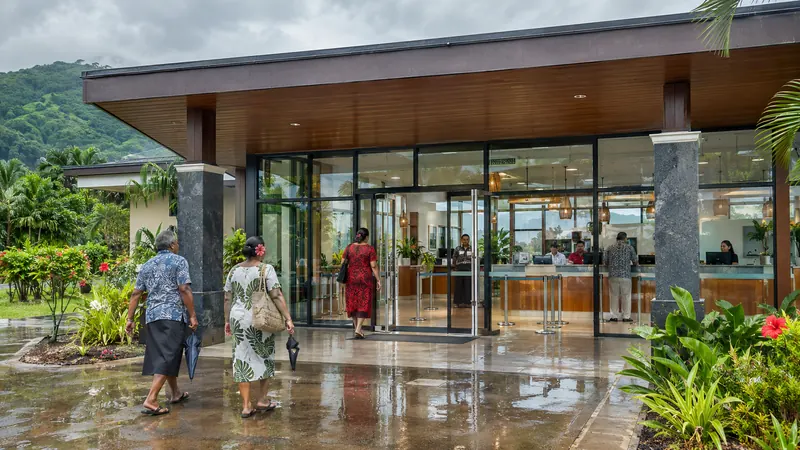
Saint Vincent and the Grenadines: a bank account for non-residents is a deposit account opened at a bank in Kingstown or on the islands by someone who does not live there, normally in Eastern Caribbean dollars (XCD) or US dollars. Banks ask for a passport, proof of address abroad, bank references and evidence of where the money comes from. Acceptance depends on a visible link with the islands, such as a property, a business activity, a local company or a plan to settle. The Eastern Caribbean Central Bank sets the monetary framework.
An island chain inside the Eastern Caribbean currency union
Saint Vincent and the Grenadines combines the main island of Saint Vincent, home to the capital Kingstown, with a chain of smaller islands including Bequia, Mustique, Canouan, Union Island and Mayreau. The country belongs to the Eastern Caribbean currency union and uses the Eastern Caribbean dollar, pegged to the US dollar at 2.70 XCD to 1 USD.
The Eastern Caribbean Central Bank, headquartered in Basseterre, issues the shared currency and supervises commercial banks across the union together with national authorities. Banks in Kingstown therefore follow rules close to those in Saint Lucia or Grenada, which makes comparing neighbouring countries straightforward.
The islands keep UTC-4 all year, five to six hours behind Paris and an hour ahead of New York in winter. Branches close early in the afternoon, and earlier still on Fridays. English is the language of banking.
Who can open a bank account for non-residents in Saint Vincent and the Grenadines
Local retail banks work first with residents, migrant workers and small businesses. Opening an account for a foreigner without residence status is still possible in several situations: owners of a villa on Bequia or Mustique, sailors who stay for long periods in the Grenadines, investors and future residents.
Banks accept a client more readily when there is an identifiable reason and clean references. A banking relationship of several years in the home country, a letter of recommendation and regular income weigh more than the size of the first deposit.
A request with no economic purpose, no link to the islands, or coming from a country flagged by correspondent banks may be rejected. Institutions do not always explain a refusal.

Documents to gather
A typical file includes a valid passport, a second form of identification such as a driving licence or national card, recent proof of address and two bank or professional references. Some banks also request an employer letter or proof of business activity.
The source of funds is examined closely. Payslips, tax returns, a sale contract for a property and recent bank statements are common. For a sizeable deposit, a written explanation of where the money comes from and how the account will be used is often required.
Banks require the tax identification number of the country of residence. Documents written in a language other than English need translation, and sometimes certification by a notary or an apostille.
Applicants should expect to answer follow-up questions several weeks after submitting the file. Responding quickly, with documents in the format the bank asked for, usually shortens the process.
Property owners in the Grenadines
An owner of a villa or plot adds the title deed, electricity or water bills and proof that property taxes are paid. These papers show the link with the country and help the bank understand why transfers will arrive regularly. They do not replace identity documents.
Banks operating in the country
The Bank of St. Vincent and the Grenadines, or BOSVG, is a local retail bank in Kingstown with branches on several islands. National Commercial Bank (SVG) also provides current accounts, savings accounts and loans to individuals and businesses. CIBC FirstCaribbean, part of the Canadian CIBC group, runs a branch in Kingstown.
The sector is small. The number of commercial banks is limited, and a few have been bought or merged in recent years within the Eastern Caribbean area. It is worth confirming the institution’s current name before sending a file.
Consultancies specialising in international mobility follow these banks and can help assemble the paperwork. They have no decision-making power; the bank remains free to accept or decline.
Checking the bank’s current name
Mergers in the Eastern Caribbean have changed several brands. A branch may display a name different from the one on an older website, and some online services have moved address. Reading the bank’s official site, then confirming by phone or email, avoids sending personal documents to an outdated contact.
Opening a bank account for non-residents from abroad
It is sometimes possible to start the process by email: scans are sent, an officer replies, and a form arrives for signature. Most banks then want original documents, sometimes certified, and a few insist on a visit to Kingstown for the signature.
A trip makes it possible to collect the debit card, online banking credentials and a written confirmation of fees. For someone who owns property in the Grenadines it coincides with a stay on the islands. When everything is done by post, the delay can reach a month or more.
Online banking from abroad is useful but not always offered to non-residents. It is better to ask before signing.
Tax, FATCA and international standards
Saint Vincent and the Grenadines takes part in automatic exchange of financial information, including the Common Reporting Standard. Banks therefore record the holder’s tax residence. An account kept without being declared in the country of residence can lead to penalties, whatever the local tax treatment.
The country has built up an international financial services sector, with international business companies and trusts overseen by the local financial services authority. Banks ask for more documents for these structures, and transparency rules have tightened under pressure from international bodies.
The Eastern Caribbean dollar is not freely convertible outside the currency union. A US dollar account avoids successive conversions when the holder’s income is already in that currency.
International companies and trusts
An international business company or a trust registered in the country provides its constitutional documents, the list of beneficial owners, a local registered agent and evidence of activity. Retail banks often decline these structures, and only a few private banks accept them, with a high minimum deposit.
Fees, payments and daily use
Banks charge account maintenance fees, commissions on international transfers and, sometimes, on deposited cheques. Fees are modest for a simple current account, but international services cost more than at large European banks.
The local debit card works at cash machines on the island and, depending on the network, abroad. Online payments to foreign merchants are sometimes restricted. Cash machines are scarce in the Grenadines, so it is wise to carry enough cash before heading to a remote island.
Cheques remain common for rent and services. A foreign holder who does not travel will mostly rely on transfers.
Foreign cheques deposited into a local account can take weeks to clear, so transfers are generally the faster option for moving larger sums.
Checks to make before committing
The bank should confirm in writing that it opens accounts for non-residents in the applicant’s situation, the opening deposit it requires, the list of documents and the ongoing fees. A verbal answer is not enough.
The holder should check the account currency, incoming and outgoing transfer fees, whether online banking exists and how dormant accounts are treated. It also helps to ask who decides and how long the decision takes.
Finally, the country of residence may require an annual declaration of foreign accounts. Keeping statements and the opening contract makes that formality easier, and a tax adviser can explain the steps.
Banks and providers to open this account
- Bank of St. Vincent and the Grenadines (BOSVG) — Local retail bank in Kingstown with branches on several islands.
- National Commercial Bank (SVG) — Commercial bank offering current accounts, savings and loans to individuals and businesses.
- CIBC FirstCaribbean — Regional subsidiary of the Canadian CIBC group with a branch in Kingstown.
- Global Citizen Solutions — International mobility consultancy publishing guides to Caribbean banks.